Podcast Trends
24 Podcast Stats and Facts You Should Know in 2024
24 essential podcast stats on listener habits, advertising, video, and branded podcasts to help you stay ahead of the industry.

Let’s face it: 2023 was a tough year for podcasting. We all remember the large-scale layoffs, persistent budget cuts, and not to mention overarching economic difficulties.
But now, as we’re comfortably into 2024, what is the state of podcasting looking like?
To help marketers, creators, and enthusiasts alike get an accurate pulse on the industry, we’ve compiled key podcast stats from leading reports and studies.
These stats speak to:
- Who podcast listeners are
- The state of audio advertising and podcast marketing
- The video podcasting dilemma
- The branded podcast landscape
Without further ado, let’s jump into the latest podcast stats and what they mean for you.
Podcast listenership and demographics
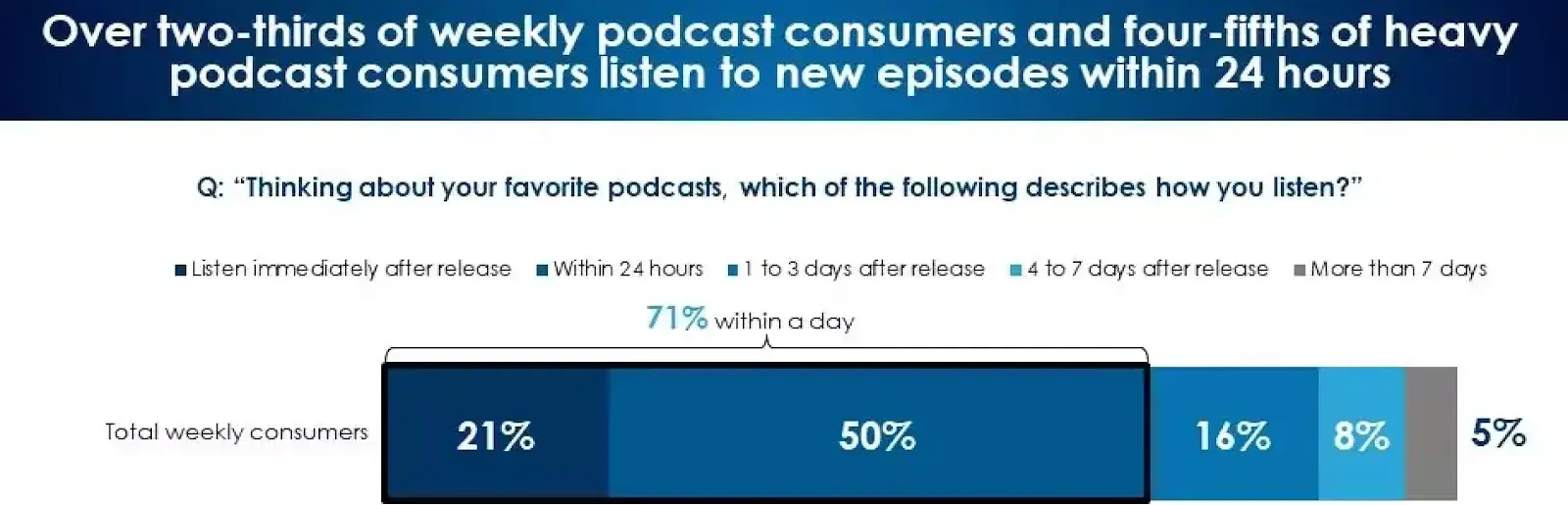
1. Podcast listeners are loyal with 71% of total weekly consumers tuning into episodes within 24 hours of release
This stat highlights the immediacy with which listeners engage with new content. This means that podcast advertising campaigns can have an immediate impact. Plus, advertisers can place timely ads that are relevant to current events, trends, or promotions, knowing they will reach listeners quickly.
For creators, this stat signifies that podcast listeners are a loyal audience who are more likely to support your show through subscriptions, merchandise, or donations.
2. Most listeners tune into over 3 podcasts a week, favoring shows published on an ongoing basis
Revealingly, listeners prefer shows that are posted regularly. With 82% of shows on Apple Podcasts being inactive, consistency is key to retaining loyal listeners. On top of that, listeners are not afraid to tune into multiple shows of the same genre.
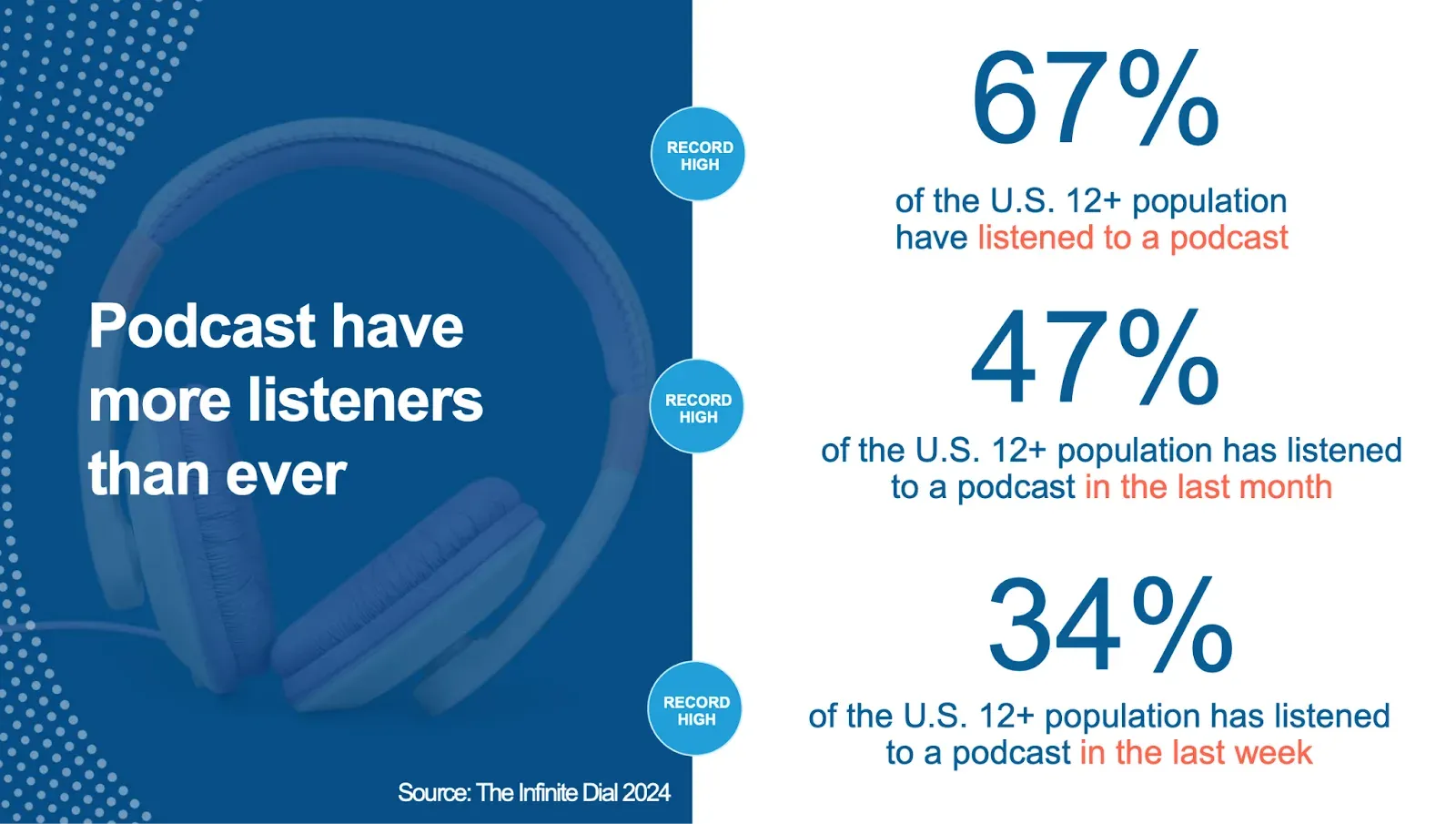
3. 34% of Americans listen to a podcast every week, up from 26% in 2022
Despite layoffs and cuts, podcasting continues to reach more people than ever. This is important for both brands evaluating their current podcast spend and creators determining the direction of their series.
4. Podcast listeners are more affluent and educated than the general population
If you’re looking to reach audiences with household income over $75,000, who own a home, and have been to college, podcasting may be the avenue for you.
For advertisers, this helps target your ads more effectively. For podcasters or brands creating their own shows, these demographic insights will help you better frame your tone and content.
5. Since 2014, the average time spent listening to podcasts has increased by 450%
From the debut of Serial (arguably the podcast that started it all), podcasting has grown a lot and it’s not showing signs of slowing down. Whether you’ve been in the industry since the start or are relatively new to audio, this means a larger potential audience and increased opportunities for content consumption year over year.
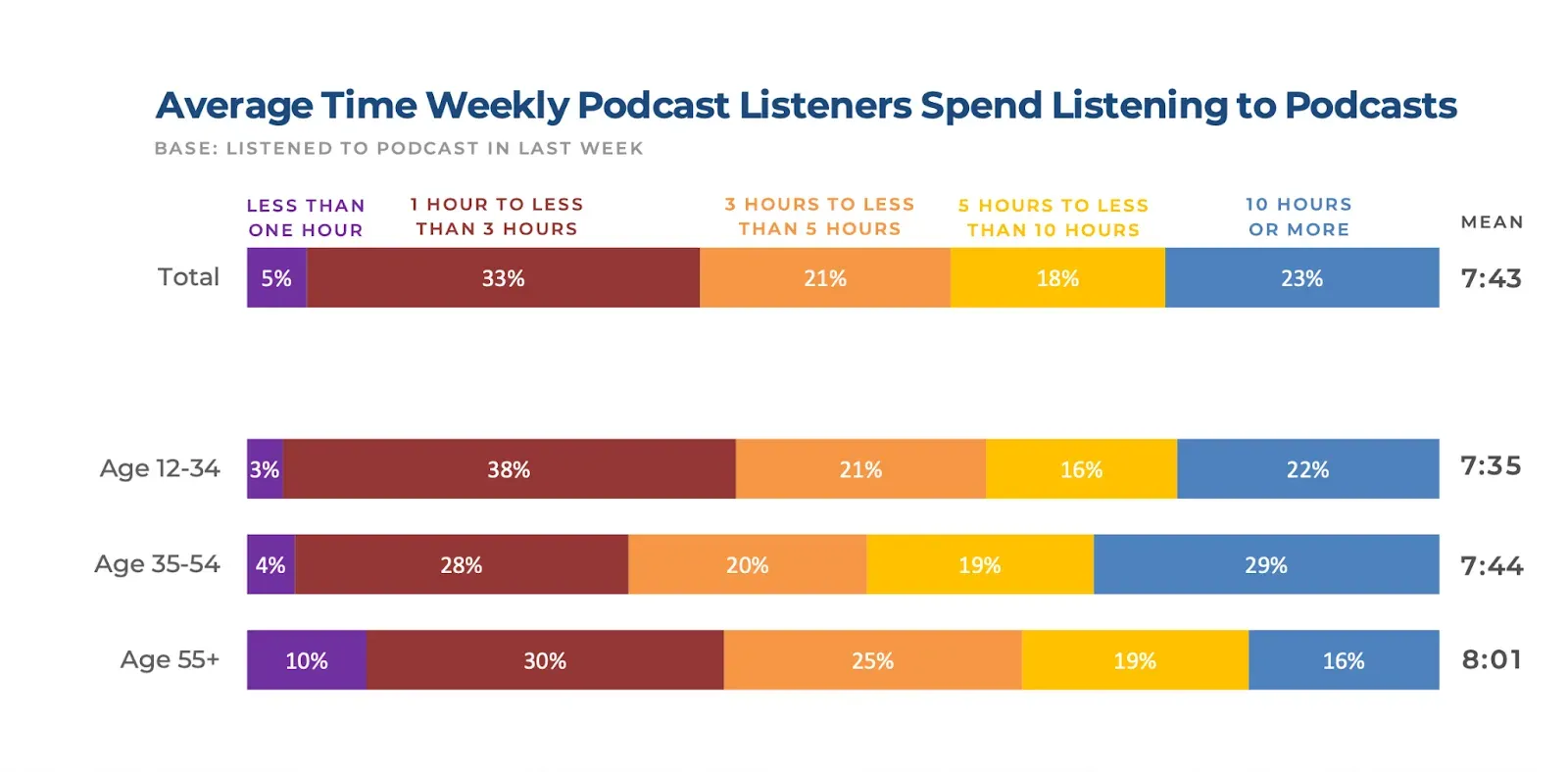
6. On average, podcast listeners consume 7.4 hours of podcast content a week
This amount of dedicated listening time indicates a high level of audience engagement and loyalty, providing podcasters with ample opportunities to build and maintain a strong listener base. Plus, podcasting can capture listeners at times when they’re typically hard to reach, like when driving (32%) or running (20%).
Podcast marketing and advertising
7. 60% of consumers remember audio and podcast ads more than they remember billboard ads
While billboard ads are much larger and a more established advertising medium, podcast ads perform better in terms of memorability. Instead of just passing by a billboard in a matter of seconds, podcast ads hold listeners’ attention for up to 30 seconds due to the intimate and connective nature of audio.
8. 40% of consumers are more likely to purchase from an audio and podcast ad than a social media ad
For brands looking to advertise, purchase intent is typically top of mind. People are more likely to purchase from podcast ads than other mediums like billboards (51%), display ads (38%), and video ads (34%). This is because of various factors including the intimate nature of the medium and the connection between the host and the audience.
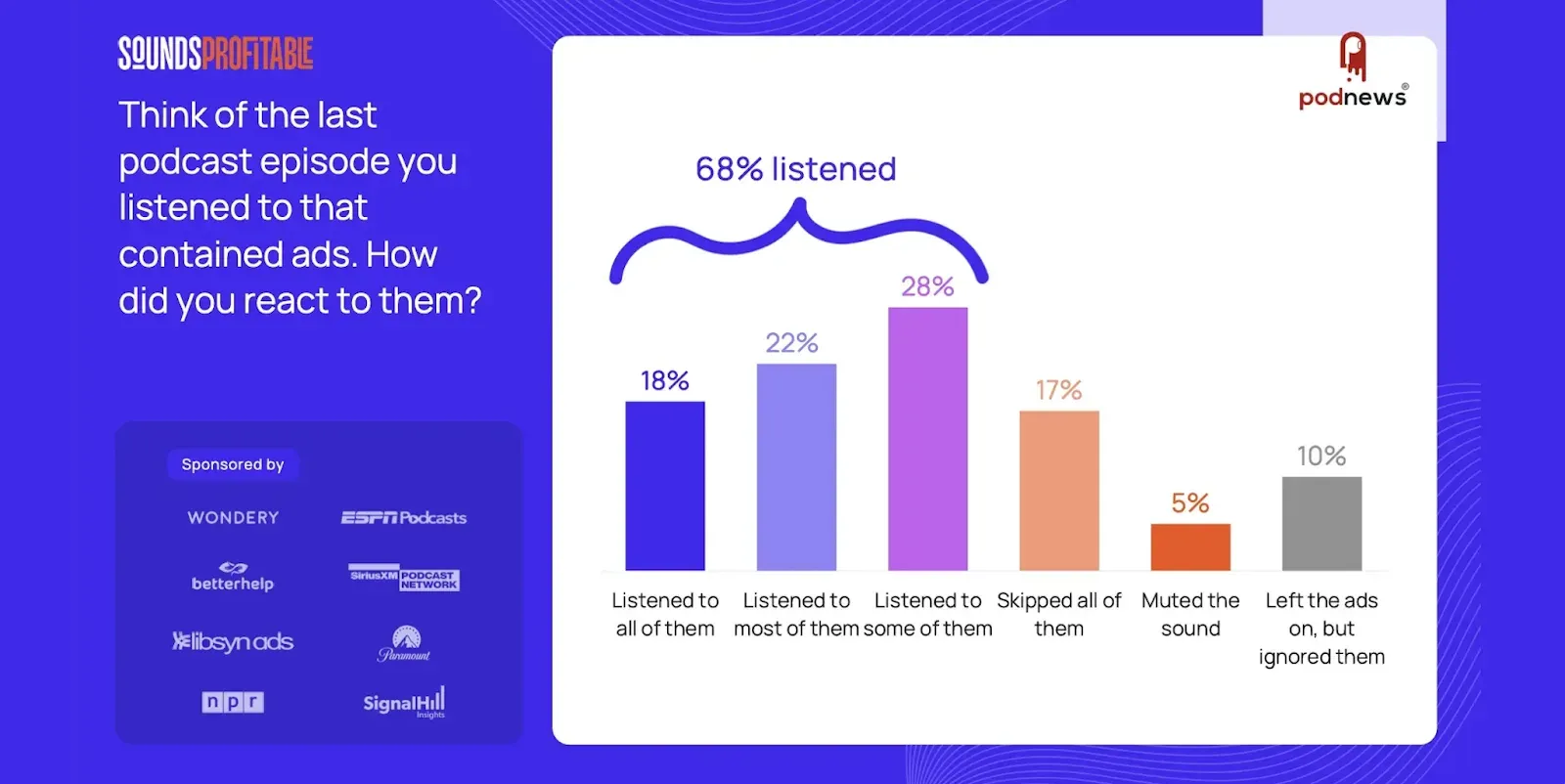
9. 68% of people listened to some or all of the podcast ads in the last episode they listened to
This high engagement rate demonstrates that podcast listeners are not only attentive but also receptive to ads. For podcasters, this means integrating ads into their episodes can be done without detracting from the listener experience. This results in increasing revenue through ad placements.
For brands, this statistic highlights the effectiveness of podcast ads in reaching and engaging a captive audience, making it a valuable channel. Bonus points if the ads are host-read.
10. 68% of listeners prefer host reads where it’s clear that the host uses the product or service
If you’re looking to make an impact in audio, authenticity is key. For podcasters, this stat highlights the value of partnering with brands that align with your personal use and values.
For brands, this preference suggests that investing in host-read ads can lead to more effective and impactful advertising, as listeners are more likely to be influenced by endorsements from hosts they trust and follow. This approach can create a more personal and credible connection with the audience, increasing the likelihood of conversion and long-term brand loyalty.
11. Nearly half of all podcast listeners have used a podcast to fall asleep and 54% of those listeners remembered an ad the next day
This underscores the unique environment that podcasts create for advertising: listeners can remember ads even when listening passively, like when they’re falling asleep.
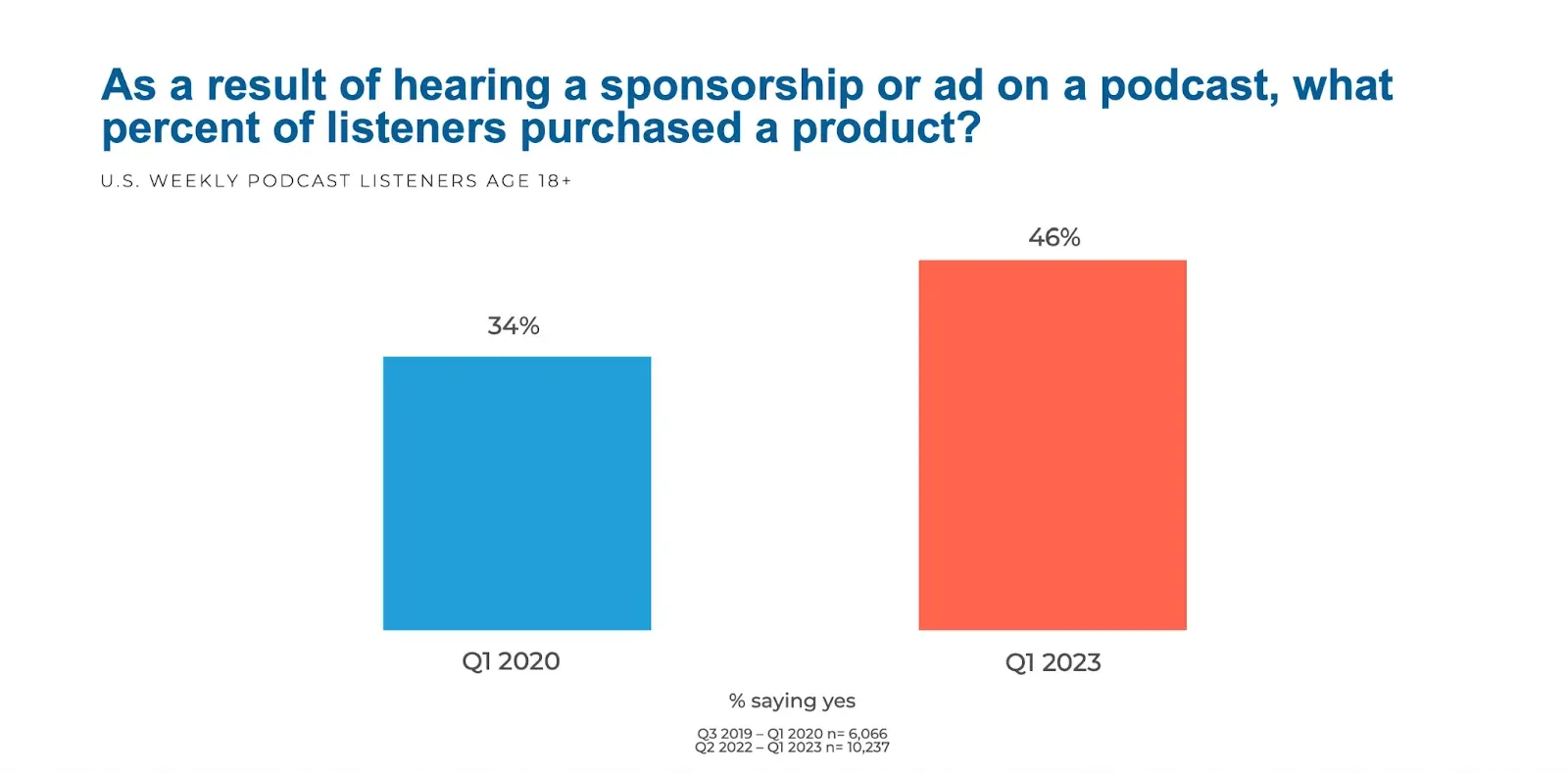
12. 46% of podcast listeners have purchased a product advertised on a podcast in 2023. This is up from 34% in 2020.
This substantial growth over the last four years highlights the increasing effectiveness of podcast advertising in driving consumer purchasing decisions.
Compared to other advertising channels, the effectiveness of podcast ads reflects the trust and credibility that podcast hosts build with their audiences, making podcast advertising a powerful avenue for reaching targeted demographics and driving sales.
Video podcasting
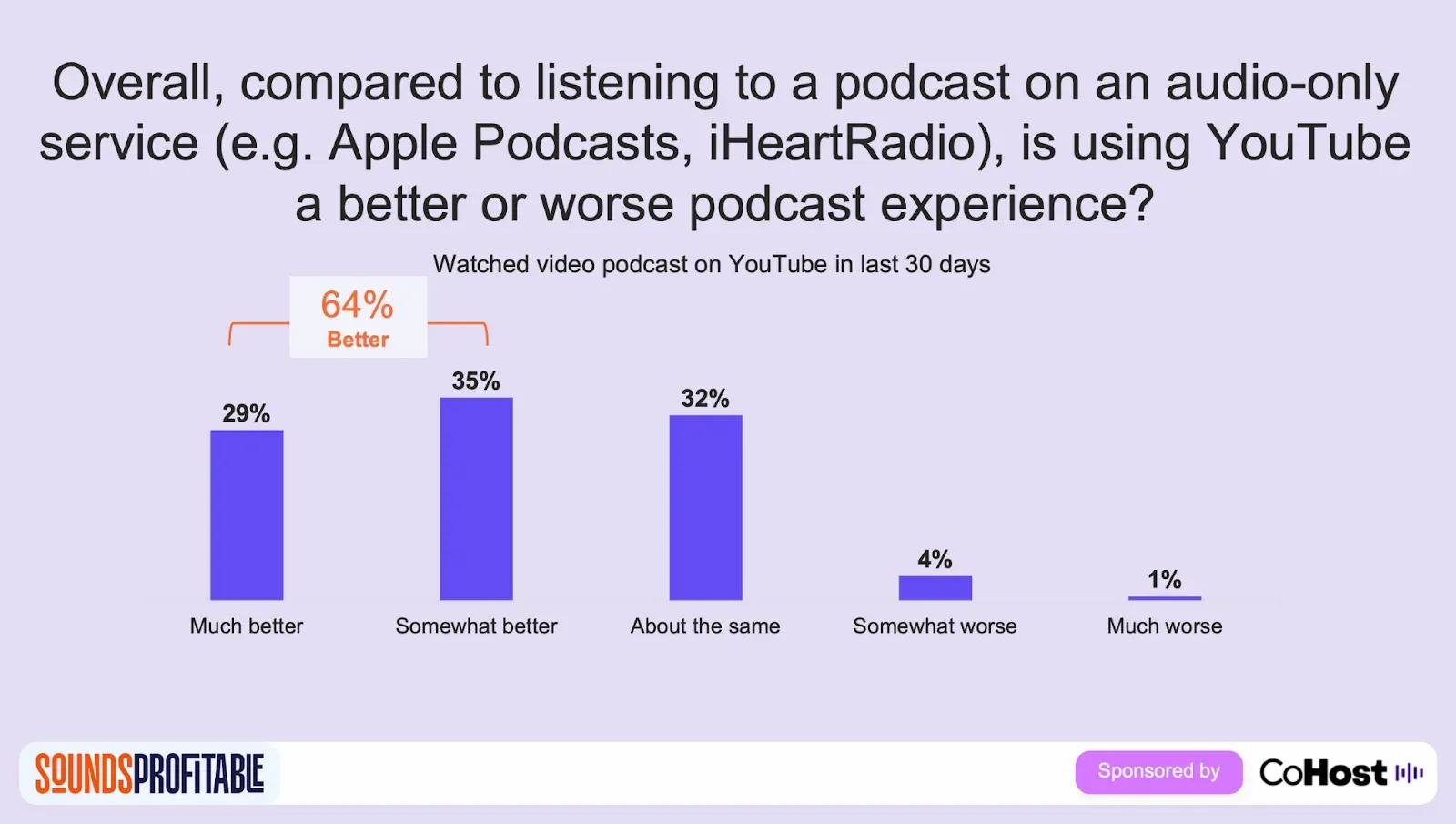
13. 64% of podcast listeners found YouTube to be a better podcast experience compared to audio-only formats
Now that YouTube Podcasts has officially launched, many podcast listeners are opting for an audio-visual experience. With more interactive features including likes and comments, listeners can interact with each other and their favorite creators more easily.
They’re also able to leave feedback in real-time, forging a better sense of community than most audio-first platforms.
14. 48% of podcast listeners find new podcasts on YouTube
Since the closure of Google Podcasts this year, YouTube has managed to step up and secure its spot in audio. YouTube marks a big opportunity for creators and brands in audio alike, as it boasts 5x as many users as podcasting platforms, signaling massive potential to reach new audiences.
15. 54% of audiences know that the video they’re watching is a podcast because it says so in the title. This is followed by 51% who cite the studio and microphones
While audiences love video podcasts, it can be difficult to define what exactly a video podcast is. Is it just two people talking in front of a camera? Do they need microphones to make it a podcast?
According to the Sound You Can See report, putting “podcast” in your video’s title and recording in a studio with microphones are an important part of the equation.
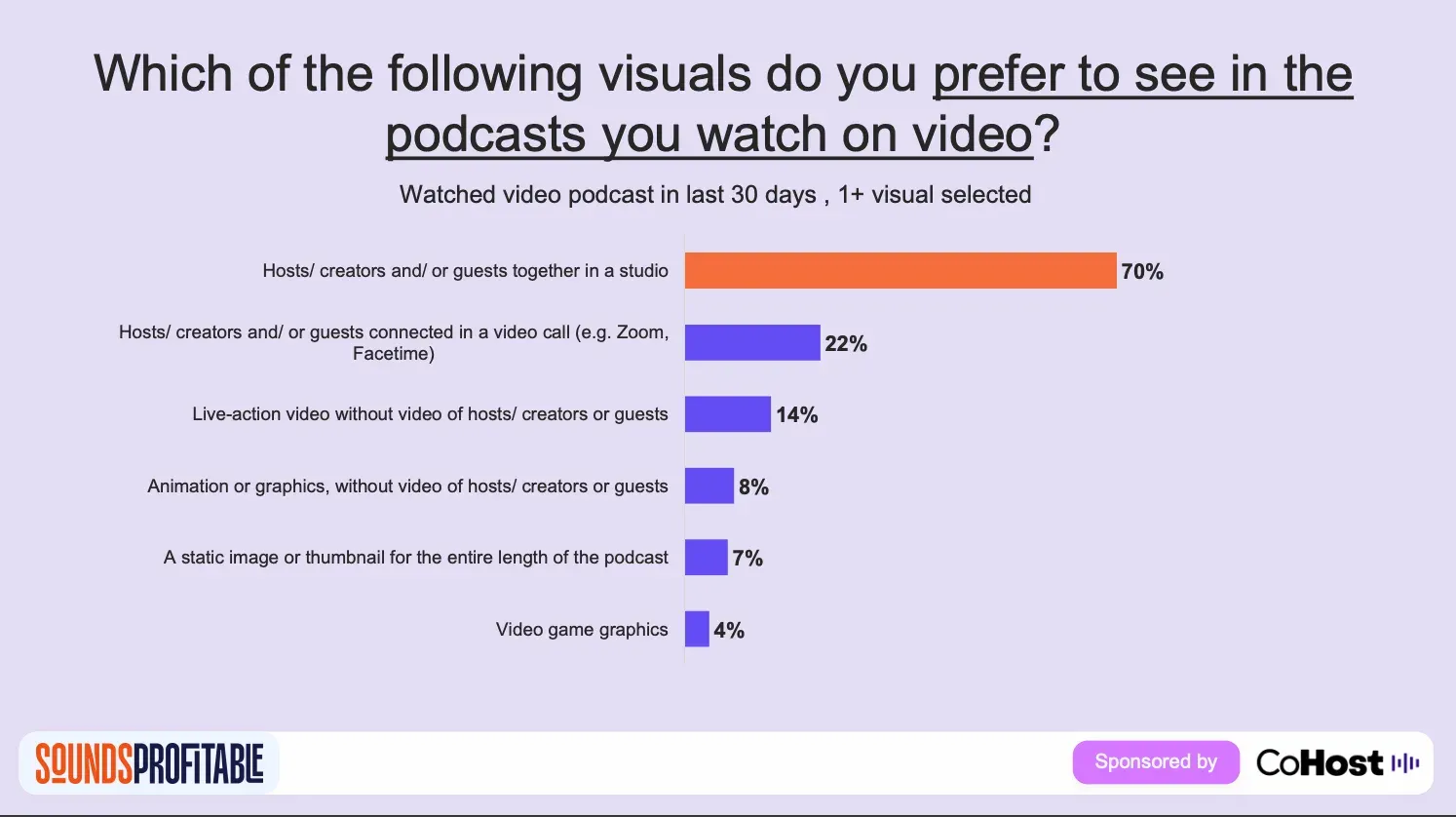
16. 70% of audiences prefer to see hosts and guests together, live in studio when tuning into video podcasts
When it comes to analyzing what people like in a video podcast compared to an audio podcast, watching the host and guests together in a studio is a big part of it. For creators looking to leverage video, this setup is important, as Zoom setups, animations, and static images aren’t going to cut it.
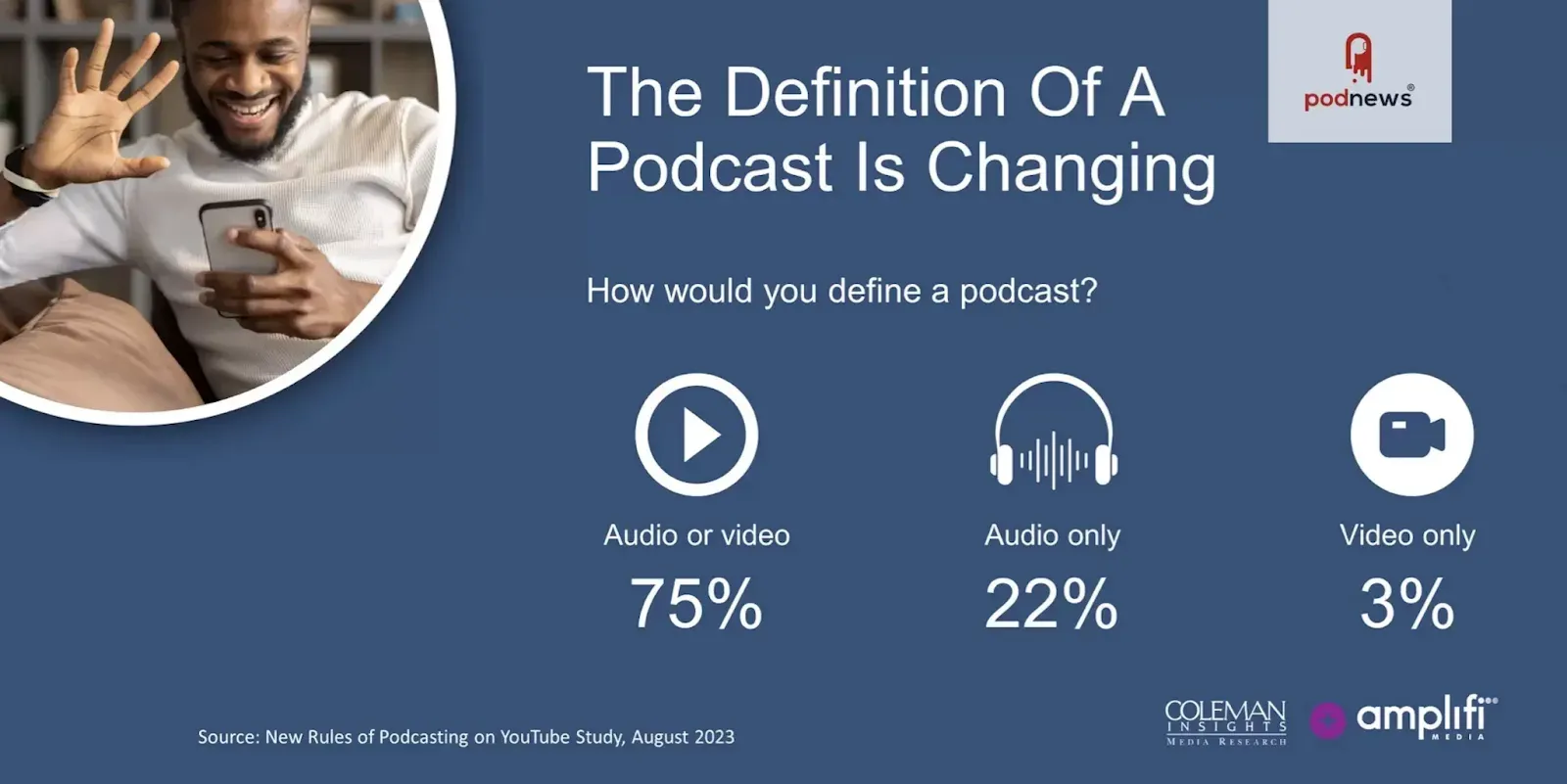
17. 75% of people believe that a podcast should be defined as “audio or video”
Moving forward, the majority of people believe that the definition of a “podcast” should include “audio or video.” This goes to show how much video podcasts have taken off in recent years and prompts brands and creators to rethink their traditional conception of an audio-only podcast.
Branded podcasting
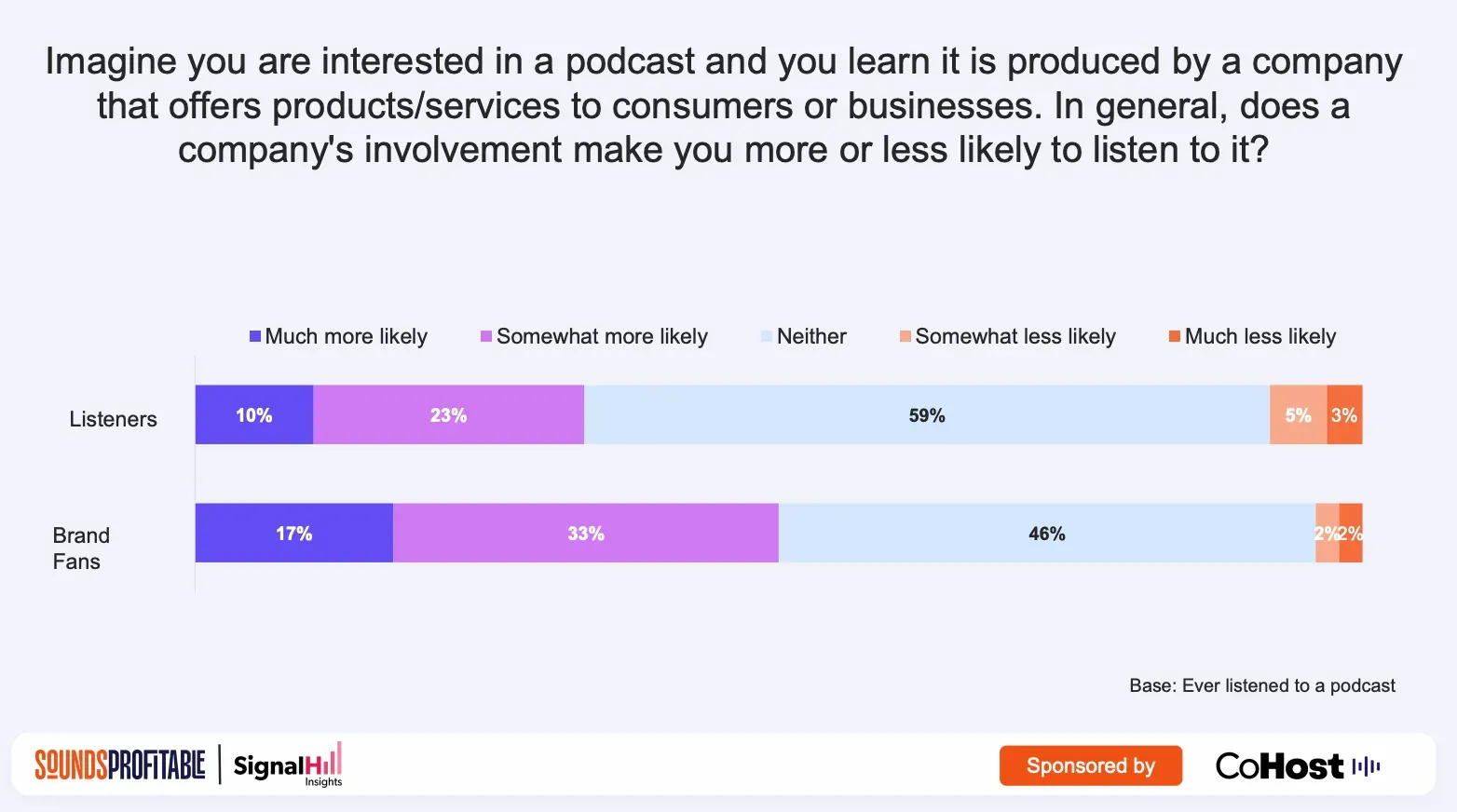
18. 50% of listeners feel positive about a brand’s involvement in a podcast as opposed to only 2% who feel negatively about it
A brand’s involvement in a podcast isn’t a negative thing: in fact, listeners look quite favorably upon it. Instead of associating branded podcasts with an elongated sales pitch, audiences are either not reading into the company’s involvement or are more inclined to listen to branded content, likely due to its reputation or a previously established affinity toward the brand.
19. 85% of companies capture video of their podcasts
Video podcasting is making its mark in audio, and branded podcasts are no exception. To keep up with the competition, we suggest looking into video podcast agencies or services to see if capitalizing on video is right for your company.
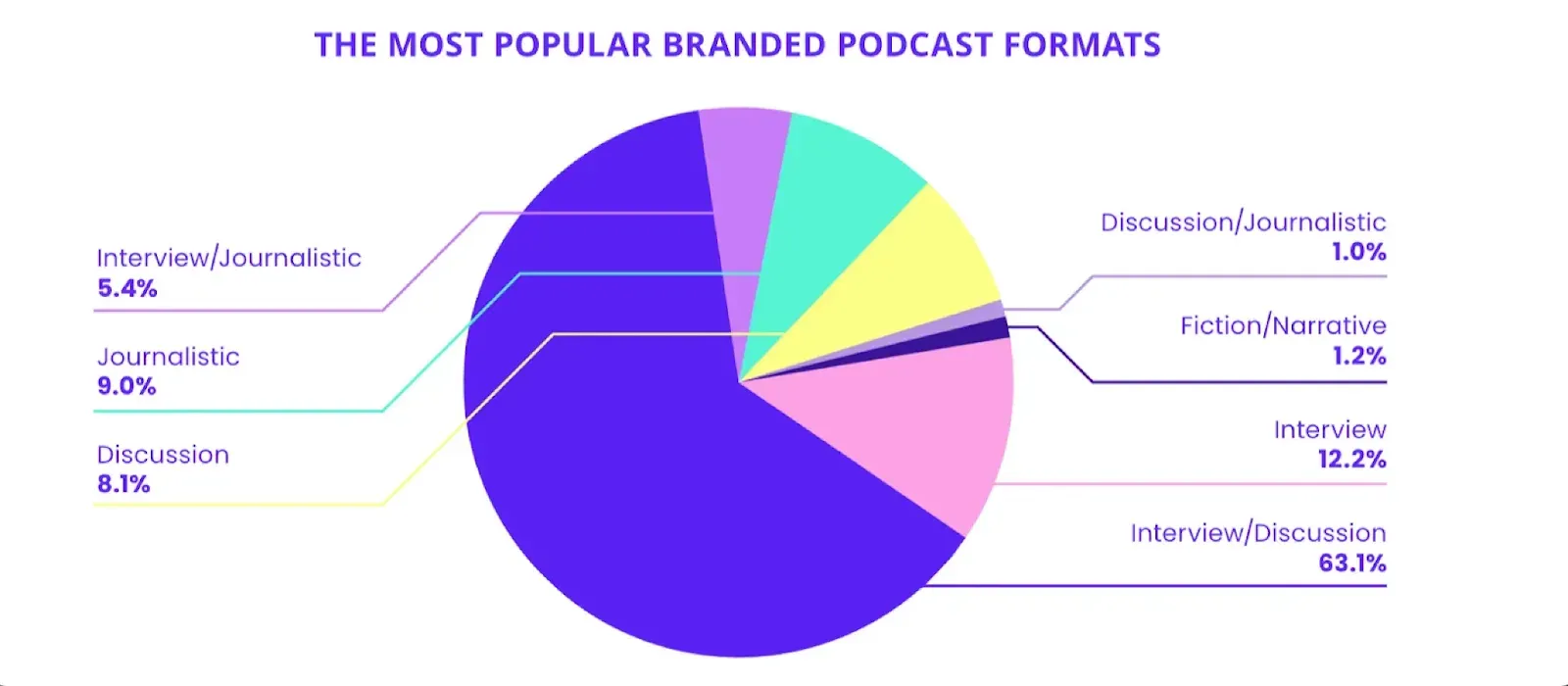
20. 63% of branded podcasts take the interview/discussion format
Even among non-branded shows, the interview/discussion format reigns supreme. On one hand, it’s a convenient and engaging format with room for variety. The format also expands the reach of episodes through your guest’s networks and establishes your show’s credibility with high-profile guests.
However, for brands looking to carve out a niche, other less-represented podcast formats, like fiction or journalistic, may be an option to explore.
21. Trackable ROI is the biggest constraint (33%) for brands in podcasting
Marketing is more data-driven than ever, but there’s a gap in the market for brands in audio looking to understand their top-performing marketing channels and which content is resonating to make the most out of their investment in podcasting.
With that said, however, there are more podcast analytics and audience insights tools than ever before, providing cutting-edge features to help you justify your podcast ROI.
22. 86% of brands reported increased brand affinity as a result of their podcast
A lift in brand affinity, according to Signal Hill, means that listeners who tuned into the podcast are more likely to rate the brand highly compared to people who did not listen. This proves that, unlike other forms of branded content, corporate podcasts are looked upon favorably by audiences and this sentiment is passed on to the brand behind the show.
23. If listeners find your branded podcast entertaining, they’re 39% more likely to listen again
Despite the reputation, branded podcasts don’t have to be boring. In fact, they shouldn’t be.
Even B2B brands or companies not selling “flashy” or “trendy” products have made podcasts that stand the test of time because they’re, above all, entertaining. To get some inspiration, check out our list of the 50 best branded podcasts of 2024.
24. 41% of podcast listeners say they would listen to a podcast about a favorite brand. This is only 5% behind how likely listeners are to tune into a celebrity show.
While you may be inclined to place branded podcasts and celebrity shows in completely different categories, the research proves otherwise. Most people who are willing to listen to their favorite celebrity’s podcast are also keen to listen to a podcast produced by a favorite brand.
If you’re a brand venturing into audio, don’t be afraid to disclose your company’s part in the podcast: listeners don’t look down upon it (unless you’re being too sales-y).
2024 podcast stats are shaping up for an amazing year in audio
Despite some challenges last year, the podcast industry has bounced back and continues to thrive. More listeners are tuning into podcasts each week than ever before, the amount of time we spend with podcasts each week is reaching new heights, and listeners are continuing to engage with podcast ads in ways that have yet to be replicated in other mediums.
With these stats in mind, podcasting not only offers unprecedented opportunities for content creators to reach captive, loyal listeners but also provides brands with a powerful platform to connect authentically with their target audience.
If you’re a brand looking to start or optimize your podcast, reach out to the Quill team.