Branded Podcasts
How to Prep Your Podcast Content Strategy for 2027
Build a podcast content strategy for 2027 with new research on reach, video, discovery, and loyalty. Learn audience planning, repurposing, and growth tips.
2027 demands a new approach to podcasting.
Why?
The branded podcast landscape is maturing, and so are audiences. Audiences are savvier, competition is steeper, and simply “hitting record” on your company’s show isn’t enough anymore.
Branded podcasts have moved from experimental marketing plays to fully fledged media channels, which means brands now need to decide how they’ll be the first, the best, or the different.
Listeners are on the hunt for podcast content that provides them value. Whether that means entertainment, education, or inspiration, your podcast content strategy for 2027 has to dig deeper into what your audience values most and deliver that with intention.
And here’s the final kicker: Podcasting can’t live in a silo anymore.
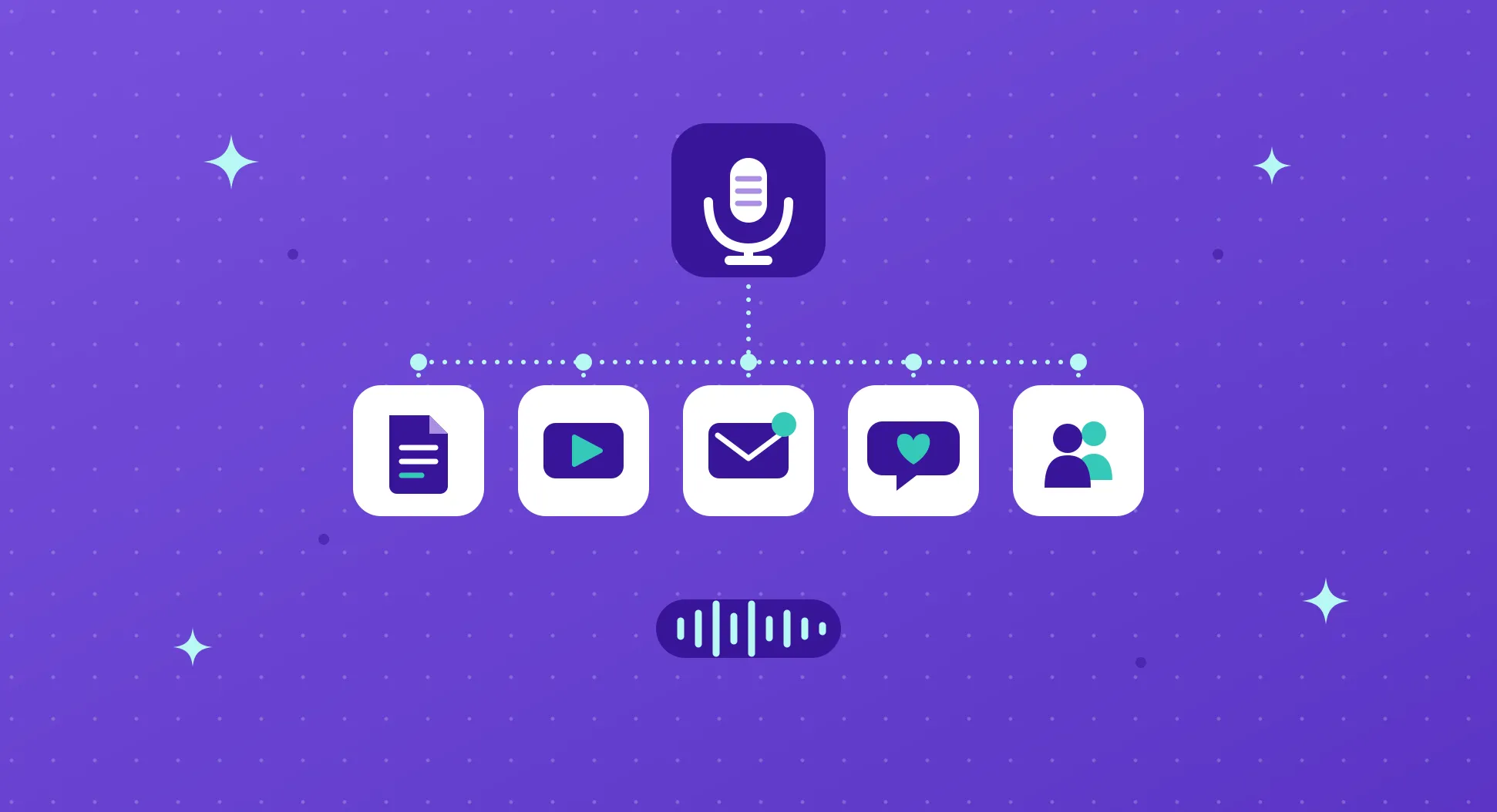
Brands can no longer treat podcasting as an isolated medium. Your podcast needs to become a core piece of your content strategy, fueling mediums like newsletters, blogs, videos, social media, and even internal teams like sales enablement and HR communications. In other words, it’s time to think about omnichannel marketing.
Don’t worry, I know we just threw a lot at you. Below, we’ll explore how brands can future-proof their podcast content strategies to create more engaging, measurable, and audience-driven shows in 2027.
The state of branded podcasting entering 2027
Last year, we told you podcasting was maturing, and organic growth was slowing.
This year? The audience has plateaued.
This might sound like a negative, but it really isn’t. Let me break it down:
Sounds Profitable’s Podcast Landscape 2026 found that podcast consumption among American adults is essentially unchanged from last year:
- 74% have ever consumed a podcast
- 55% consumed one in the past month
- 39% consumed one in the past week
(And depending on who you ask, the audience is even bigger. Edison Research’s Infinite Dial 2026, which also counts teens, puts it at a record 80% of Americans 12+ who have listened to or watched a podcast.)
So the size of the audience isn’t the story anymore. As Sounds Profitable put it, what changed is everything around those numbers:
- The audience is turning over. 34% of podcast consumers say they started within the past year, up from 28% in 2025.
- Video keeps climbing. 44% of podcast consumers watched a video podcast in the past week, up from 40%.
- Podcasts have hit the TV. In its first year carrying podcasts, Netflix was named by 21% of podcast consumers as a platform they use, third behind YouTube (63%) and Spotify (33%).
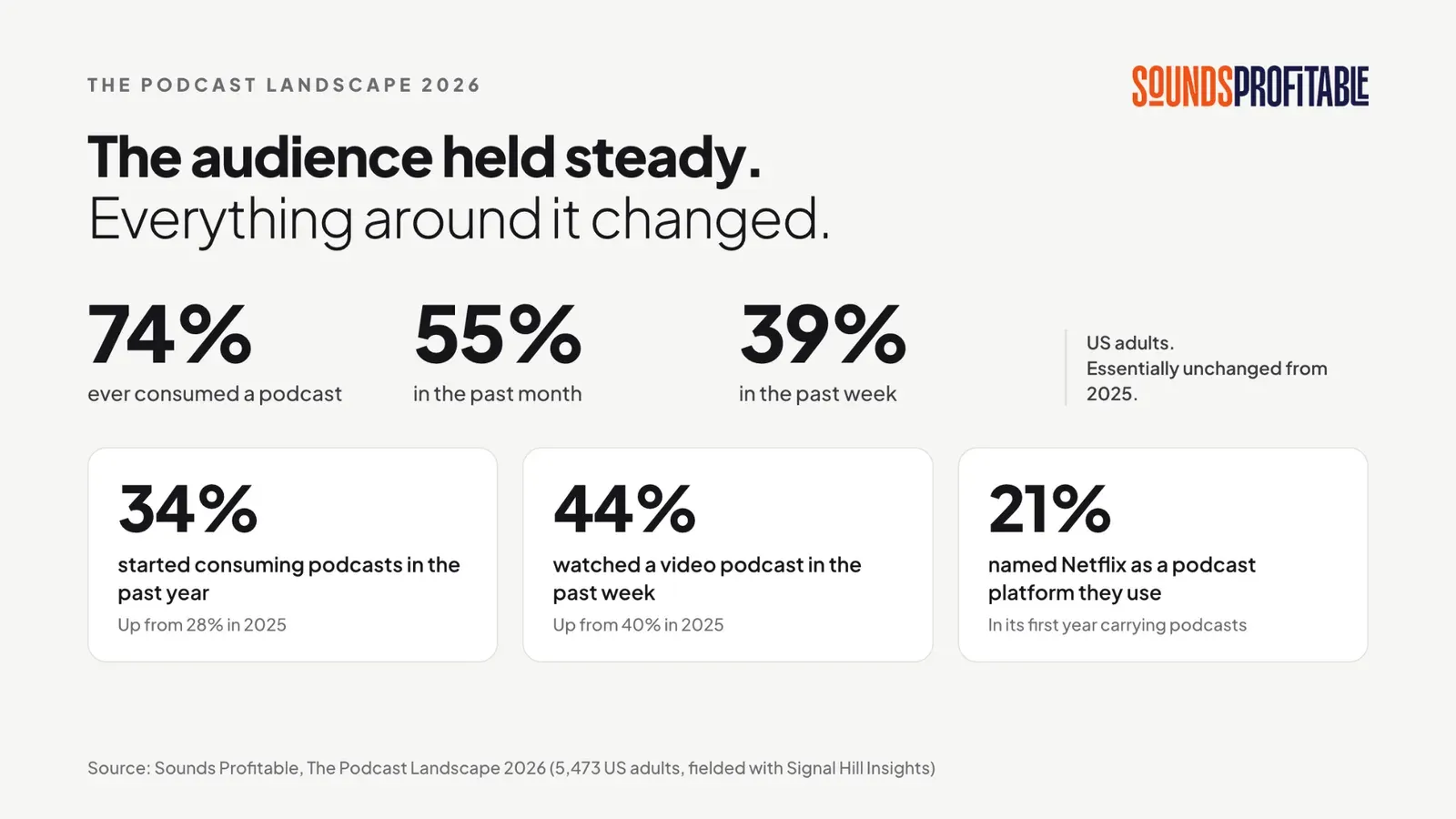
In other words, a third of the audience is brand new, and they’re finding shows in places that didn’t carry podcasts a few years ago. That’s a real opening for brands. But only for the ones that are actively competing for attention.
Because here’s the other side of the coin: Once listeners find a show they love, they stay. The Podcast Study 2026 found 88% of listeners spend at least half their podcast listening time with one favorite podcast, and 82% say the host is a big part of why they listen (or the only reason).
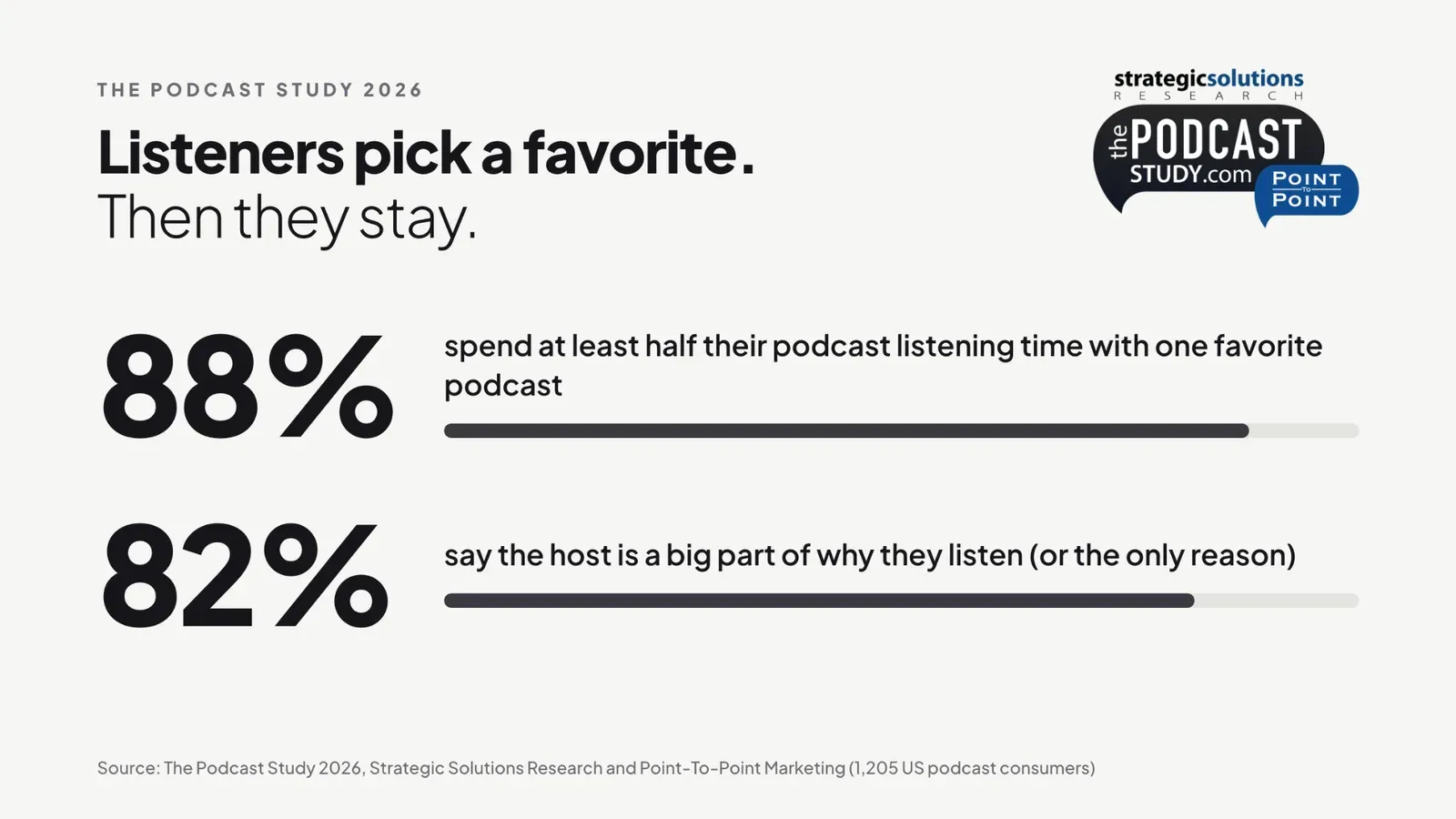
That’s a tough slot to win. And “just existing” won’t get you there.
Podcasts are competing with all forms of content for attention, and the marketers that thrive will be the ones that understand they need to actively compete for their listeners’ attention, understand them, go niche, and provide them with valuable content.
Essentially, you have to be good at what you do, with 79% of podcast consumers citing “discussions on topics of interest” as an important reason podcasts matter to them.
Branded podcast content strategy preparation
Before you dive headfirst into your podcast’s content strategy for 2027, you need to answer two key questions:
- What are your goals?
- Who are you talking to?
Let’s look at both of those:
1. Set podcast goals that align with business outcomes
The first step before getting started on any content strategy, including your branded podcast: What’s your goal? Why are you creating this podcast for your brand?
You need to be able to identify the core outcomes for your branded podcast; otherwise, how will you know whether it’s performing well or not?
Typically, we’ll see brands having a “brand awareness” goal.
It’s not bad… and also understandable that you want to build brand awareness through your podcast, but here are some more specific goals to think about:
- Thought leadership
- Internal culture building
- Event amplification
- Partnership building
- Lead generation
2. Audience-centric planning: Who are you really talking to?
Let’s talk listeners.
Because if your podcast content strategy doesn’t start with a clear picture of your audience, everything else, like format, distribution, and marketing, becomes guesswork.
Your podcast goals will naturally shape who your content is for.
If lead generation is the north star, you’re speaking directly to your company’s Ideal Customer Profile (ICP). If the goal is thought leadership, then your audience likely includes professionals in your industry, peers, partners, or even potential recruits.
At Quill, we like to take this a step further and encourage brands to define their Ideal Listener Profile (ILP). Think of it as your podcast’s version of a buyer persona, tailored specifically for audio.
Here are a few ILP categories to explore:
- Demographics: Age, gender, income, family status, location
- Psychographics: Interests, values, lifestyle, content habits, social behavior
- Firmographics: Industries, companies, job titles, seniority levels
The more precise your ILP, the better you’ll be at shaping content that resonates and converts.
And this influences every piece of your strategy, including:
- The platforms you publish on
- Your episode format, structure, and length
- Release schedule and cadence
- How and where you market your show
What to include in your 2027 podcast content strategy
| Strategy element | What to plan |
|---|---|
| Editorial Themes & Pillars | What topics will you be covering in your podcast? Create content buckets or pillars to ensure a cohesive show. |
| Episode Formats | Will you be doing solo episodes, performing interviews, creating a narrative, or using a hybrid approach? And will your show be audio-only, or will you be filming it too? |
| Guest Strategy & Outreach | What type of guests will you be looking to bring onto the podcast? Where will you find them? How are you approaching outreach? We recommend building a media kit to share with guests, along with templated outreach. |
| Production Cadence & Season Planning | Create your workback schedule for production and lay out how often you plan to release episodes. Weekly? Bi-weekly? Monthly? Also, identify whether your show will be ongoing or seasonal. |
| Distribution Strategy | What tools will you use to distribute your podcast (podcast hosting platform)? Where else will you need to manually distribute content, such as video (i.e., YouTube and Spotify)? Who owns the distribution process on your team to ensure each episode runs smoothly? We recommend creating an “Episode Publishing Checklist” so you ensure you don’t miss an asset or step whenever releasing new content. |
| Audience Growth Plan | How will you grow your podcast? Outline your mix of paid and organic promotion channels, how you’ll market your show on these, as well as how you’ll measure performance. Don’t skip YouTube and social here: 61% of favorite-podcast discovery happens on YouTube or social media (Sounds Profitable’s Podcast Discovery Playbook 2026). |
| Performance Measurement & Benchmarks | What podcast metrics are you tracking to measure success? Downloads, unique listeners, consumption data, lead generation, new listeners, etc. Build your templated reporting guide and add goals or benchmarks for performance to measure against. |
| Repurposing Roadmap | How will you ensure your podcast doesn’t live in a silo and can support other areas of your brand? Can you repurpose episodes into blogs, videos, social media content, and newsletters? Can the podcast also support teams like sales, internal comms, and public relations? |
Common content strategy mistakes to avoid in 2027
Alright, let’s talk about the most common missteps we see brands make when building out their podcast content strategy.
Of course, every strategy should be tailored to your brand, goals, and audience. What works brilliantly for one podcast might flop for another. But the pitfalls below tend to be universal across the branded podcast landscape:
1. Prioritizing volume over value
The age-old debate amongst marketers: Quantity vs. quality.
Here’s the truth: Listeners don’t want more content; they want better content. If your team is struggling to keep up with a weekly cadence, slow it down. Focus on delivering value in every episode rather than flooding feeds with forgettable ones.
Remember that 88% from earlier? Listeners give most of their time to one favorite show. Nobody picks a favorite because it publishes the most.
2. Skipping narrative arcs and cohesion
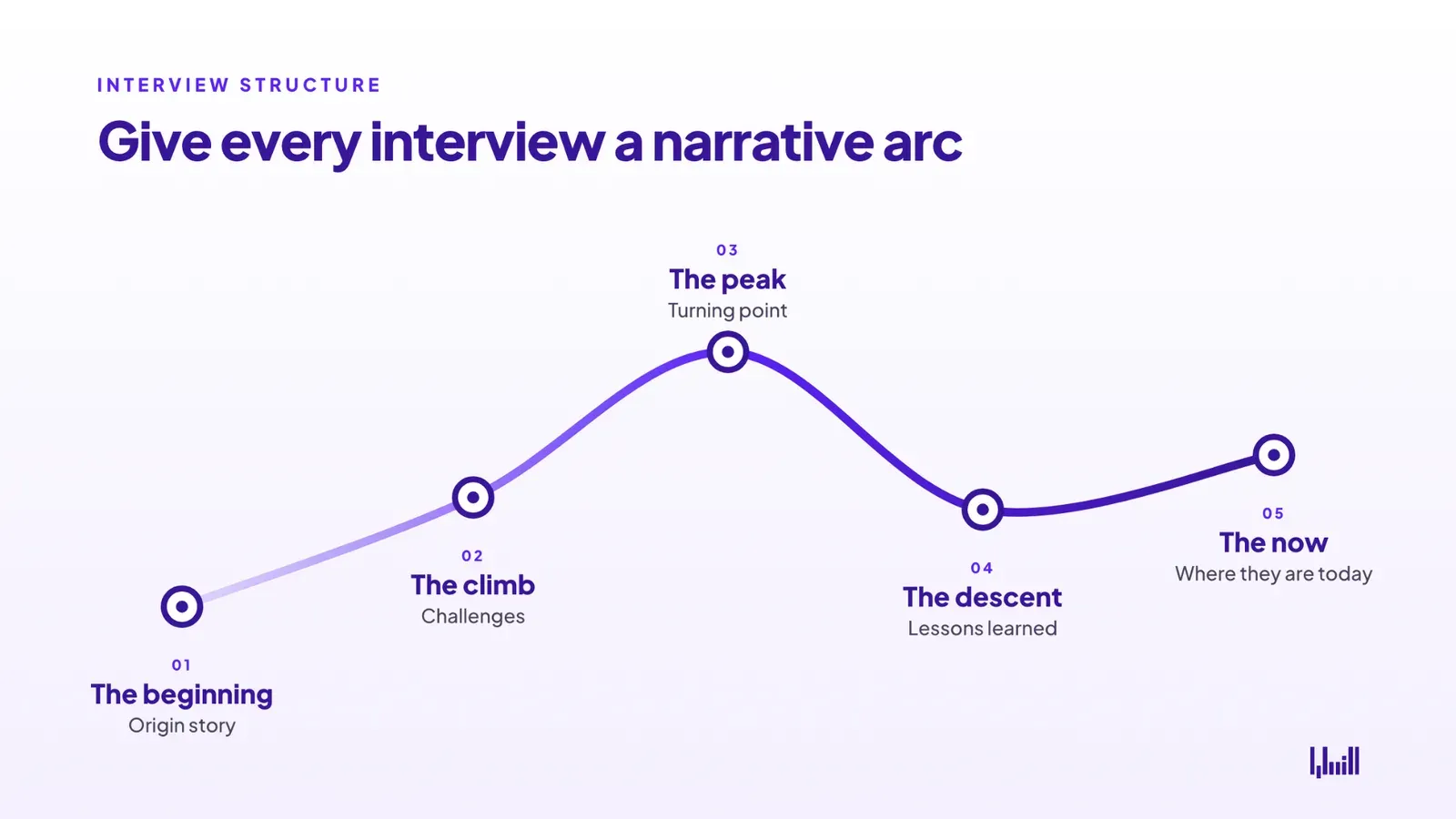
People love a story. Yet too many branded podcasts forget to structure episodes with a clear narrative arc, even in interviews.
For example, an interview flow could look like:
- The beginning (origin story)
- The climb (challenges)
- The peak (turning point)
- The descent (lessons learned)
- The now (where they are today)
3. Siloing your podcast instead of repurposing it
Your podcast is one of the richest content sources you have, so don’t let it live in isolation.
Turn episodes into blog posts, social clips, newsletter content, sales enablement assets, or even event themes. Think of each episode as a content engine, not a one-and-done project.
And those social clips do double duty in 2027. Among listeners who found a favorite podcast through social media, 60% found it through content shared by an account they follow, not through sponsored posts (Sounds Profitable’s Podcast Discovery Playbook 2026).
4. Treating podcasts like blogs or YouTube videos
And while repurposing is smart, let’s not confuse formats. A podcast is not a blog, nor is it a YouTube video.
Yes, even now that 44% of podcast consumers are watching video podcasts every week.
Plenty of your audience is still listening with the screen off. Sounds Profitable’s Audio Primes 2026 report found that 22% of podcast consumers take in at least 75% of their podcasts as audio, and that group skews younger, better educated, and higher earning.
Listeners are multitasking; maybe they’re walking the dog, commuting, or cleaning the kitchen. You need structure, clarity, and tone built for audio-first experiences. It’s a different medium, and it deserves its own rules and format.
The good news? A show built for the ear works on camera too. The reverse isn’t always true.
Working with podcast agencies to scale your strategy
Let’s wrap things up with a word on podcast agencies.
Whether you’re launching a new show or looking to evolve an existing one, working with a podcast agency can take your branded podcast from good to standout.
Agencies don’t just swoop in at the editing stage. The right one will collaborate with you on everything from content strategy and scripting to sound design, distribution, and audience growth. They bring expertise, frameworks, and bandwidth that many internal teams simply don’t have in-house.
Here’s a quick breakdown:
Ready to future-proof your podcast content strategy?
Podcasting in 2027 isn’t about producing more; it’s about producing with purpose.
“I’d take a show with 500 listeners who never miss an episode over one with 5,000 who drift in and out. The first one is an audience. The second one is traffic. And traffic is easy to buy. An audience is something you earn, one episode at a time, by giving people a reason to come back next week.”
The brands that succeed will be those that treat their podcast as a strategic channel, not a side project. That means planning around audience needs, tying content to business goals, and building a system that drives both value and consistency.
Whether you’re launching a new show or evolving an existing one, focus on content that connects, converts, and earns your audience’s attention week after week.
Ready to future-proof your podcast strategy? Subscribe to The Branded Podcaster for expert tips and industry insights.