

Contents
One of the most common questions we get asked as a podcast agency is “How do we let our audience know our show exists?”
Our answer, more often than not, is podcast SEO.
When your show is optimized for search, you’ll show up when someone types your podcast name, a specific episode title, or even a broad topic your series covers into Google, Spotify, Apple Podcasts, or YouTube.
And that matters more than it used to. 55% of Americans over 12 are now listening to podcasts every month. Of course, more listeners is good news, but it also means more shows competing for the same ears.
Here's the hard truth: A brilliant branded podcast does nothing for your business if the right people never find it.
And podcast SEO is how they find it.
Below are six ways to boost your branded podcast's SEO, plus what's changed in the last two years that most "podcast SEO" advice hasn't caught up to yet.
TL;DR
- Podcast SEO isn't optional: Make sure you're optimizing your titles, descriptions, show notes, transcripts, and web pages around the keywords your audience actually searches.
- Keywords are the backbone: Target terms with real search volume and low competition, then use them naturally (never stuff them).
- Own your written content: Show notes, transcripts, and companion blogs give search engines something to read, since they can't listen to your audio.
- Transcripts are a must: Spotify and Apple now auto-generate them, so the edge is no longer having a transcript. It's owning and optimizing one on your own site.
- A podcast website or landing page is key: It turns scattered episodes into a hub you control and can rank.
- AI is the new search bar: Tools like Claude, ChatGPT, and Google's AI Overviews are where increasingly more listeners are searching for their next listen.
- Podcast SEO is a long game: Expect to see the most accurate results in months, not days. Consistency always wins.
What is podcast SEO?
While podcast SEO may be a new term for you, you’ve likely heard of SEO before.
Traditional website SEO is the process of improving your visibility through relevant searches. Podcast SEO follows the same approach, but caters specifically to audio content.
In particular, podcast SEO includes optimizing episode titles, show descriptions, show notes, episode descriptions, and more for your show’s target keywords – much like you would optimize your website for your brand’s target keywords.
Podcast directories, like Spotify and Apple Podcasts, use this information to categorize and recommend content to listeners.
Because podcast SEO and website SEO influence each other, you’ll want to follow the best practices for both to increase your branded podcast’s discoverability and visibility across listening apps and search engines.
Podcast SEO is changing: AI answers and YouTube
For years, podcast SEO meant getting your show to rank in search engines and listening apps. That (of course) still matters. But there are two shifts that you should be aware of that are quietly rewriting where people find podcasts:
AI is becoming the search bar
People increasingly don't type a query and scroll through a page of Google search results. They ask a question directly to LLMs like Claude and ChatGPT. ChatGPT reached more than 800 million weekly users in late 2025, and Google now answers a large share of searches with AI Overviews before anyone reaches a result they can click.
And, like typical search engines, none of these tools can listen. Your best episode, the one with the perfect guest and the quotable moment, is invisible to them if it only exists as audio. They read. They pull from clean, well-structured text and cite the sources that spell things out clearly, which is exactly what a real transcript, proper show notes, and a companion blog give them. These tools reward semantic meaning and intent, not keyword stuffing. Write like a person answering a real question, and you're most of the way there.
YouTube’s a big part of the podcast scene
By now, you know YouTube has made a serious dent in podcasting. It's also the world's second-largest search engine. Put those two facts together, and it stops being "a nice place to post video" and becomes one of the most important places your show can get found.
The numbers make the case. YouTube crossed 1 billion monthly podcast viewers in early 2025, and it's now the service people in Canada and the UK use most often to listen to podcasts, ahead of Spotify and Apple.
That changes how you should publish. Post your episodes to YouTube, even as a static-audio video, and pair them with the SEO tips we’ll dive into below. In particular, you’ll want to make sure you include:
- A title that describes the episode: People search YouTube the way they search Google, so make sure your title speaks to what the episode is actually about.
- A description built around the terms people search: this is where your keywords earn their keep.
- Accurate captions: YouTube reads them to understand and rank your video, and you can repurpose that same transcript into show notes and a companion blog.
What are podcast keywords?
We’ll be mentioning podcast keywords quite a bit in this article because they’re essentially the backbone of your show’s SEO.
These are words or phrases that describe your podcast series or individual episodes. They help people discover your show via search engines and podcast apps alike.
Here are a few different types of podcast keywords:
- Series or brand keywords include the name of your podcast or your brand.
- Genre keywords are related to the genre, category, or format of your series, like “interviews,” “technology,” or “AI.”
- Episode keywords are specific to the episode’s topic or guest.
- Host keywords help you build your host’s personal brand or leverage their existing brand.
- Guest keywords center on the guest that you have in each episode. These can include their brand name, an event they're known for, their own name, etc;
To help you find the best keywords for your show, we suggest using an SEO tool like SEMRush or Moz. These sites provide insights like search volume, keyword difficulty, your current ranking, and much more.
The sweet spot is high search volume and low competition: Plenty of people searching the term, not many shows in your niche going after it.
Chasing the biggest, broadest keyword ("marketing podcast") is usually a losing game. A specific, intent-rich phrase ("B2B podcast measurement") is easier to win and brings you listeners who actually want what you make.
One more thing before we get into the tactics: none of this is instant. It takes search engines and apps time to index your content.
With that said, let’s dive into some of the ways you can help improve your podcast’s search results. We’re going to dive into each one and break down how you can implement it into your podcast strategy.
1. Google feature snippet
While podcast discoverability can be tough, there are usually a good number of people searching for specific podcast niches on Google.
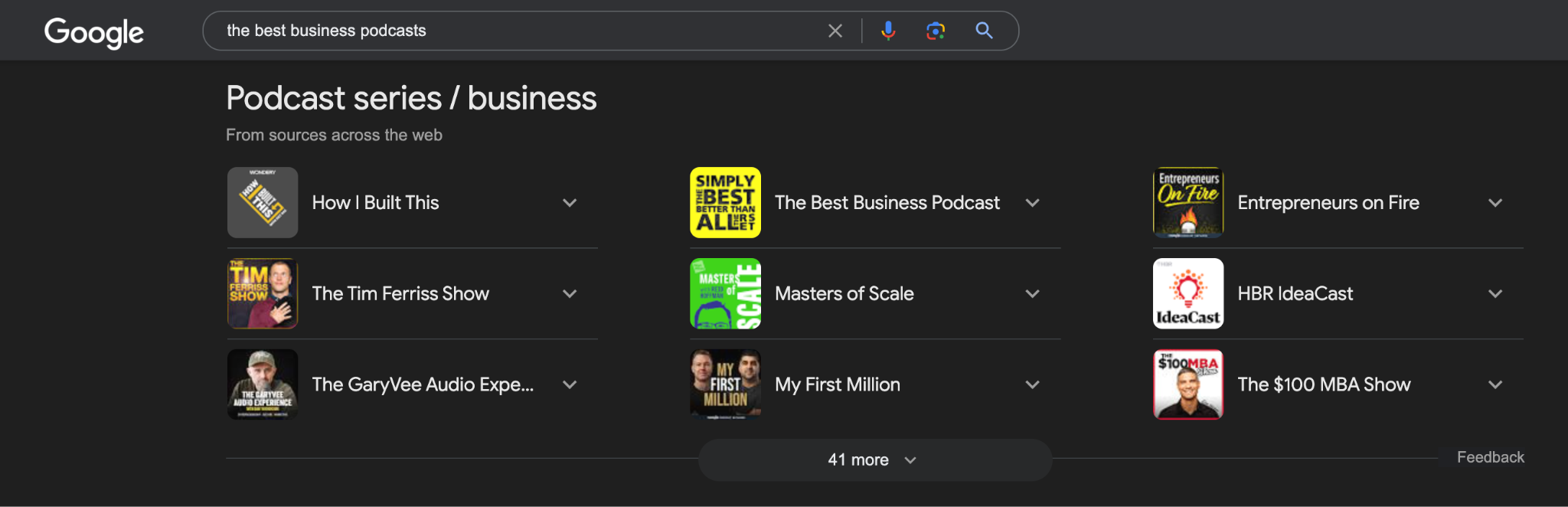
Ideally, you’ll want your podcast to be included in the feature snippet for terms like "Best [Category] Podcast." That's the boxed answer Google surfaces at the very top, and it's valuable: the #1 organic result earns about 27.6% of all clicks,
Getting there usually means two moves working together:
- Get listed in other people's roundups. Pitch your show to the "best [category] podcast" listicles that already rank for your target term. The more of those you appear in, the more Google reads your show as a legitimate answer.
- Publish your own content for the term. A page on your site that genuinely answers "best [category] podcasts" gives Google a reason to rank you directly, not just mention you.
For example, The Long Game works into a few categories like "content marketing podcasts," "marketing podcasts," and "SEO podcasts." So they used the Surround Sound Strategy to get listed in as many listicles ranking for these terms as possible, all while creating their own content for target keywords.
2. Podcast descriptions
There are two different types of podcast descriptions: A series description and episode descriptions.
Series description
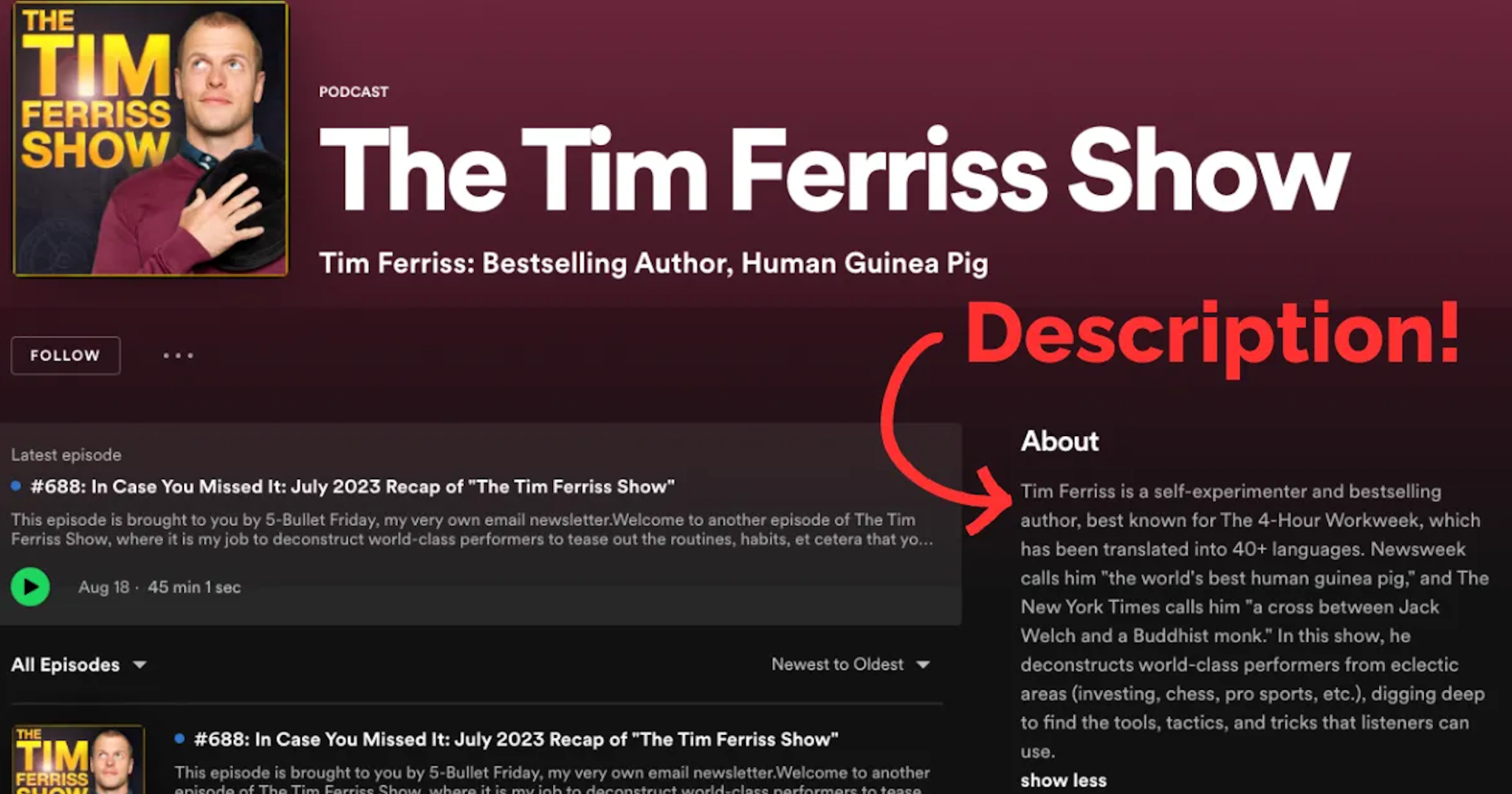
A series description is a short paragraph that breaks down what your podcast is about, who it’s hosted by, and when listeners can tune in. These descriptions are what will be paired with your podcast icon on all listening platforms.
For example, here’s what the series description for The Tim Ferriss Show looks like:
Episode descriptions
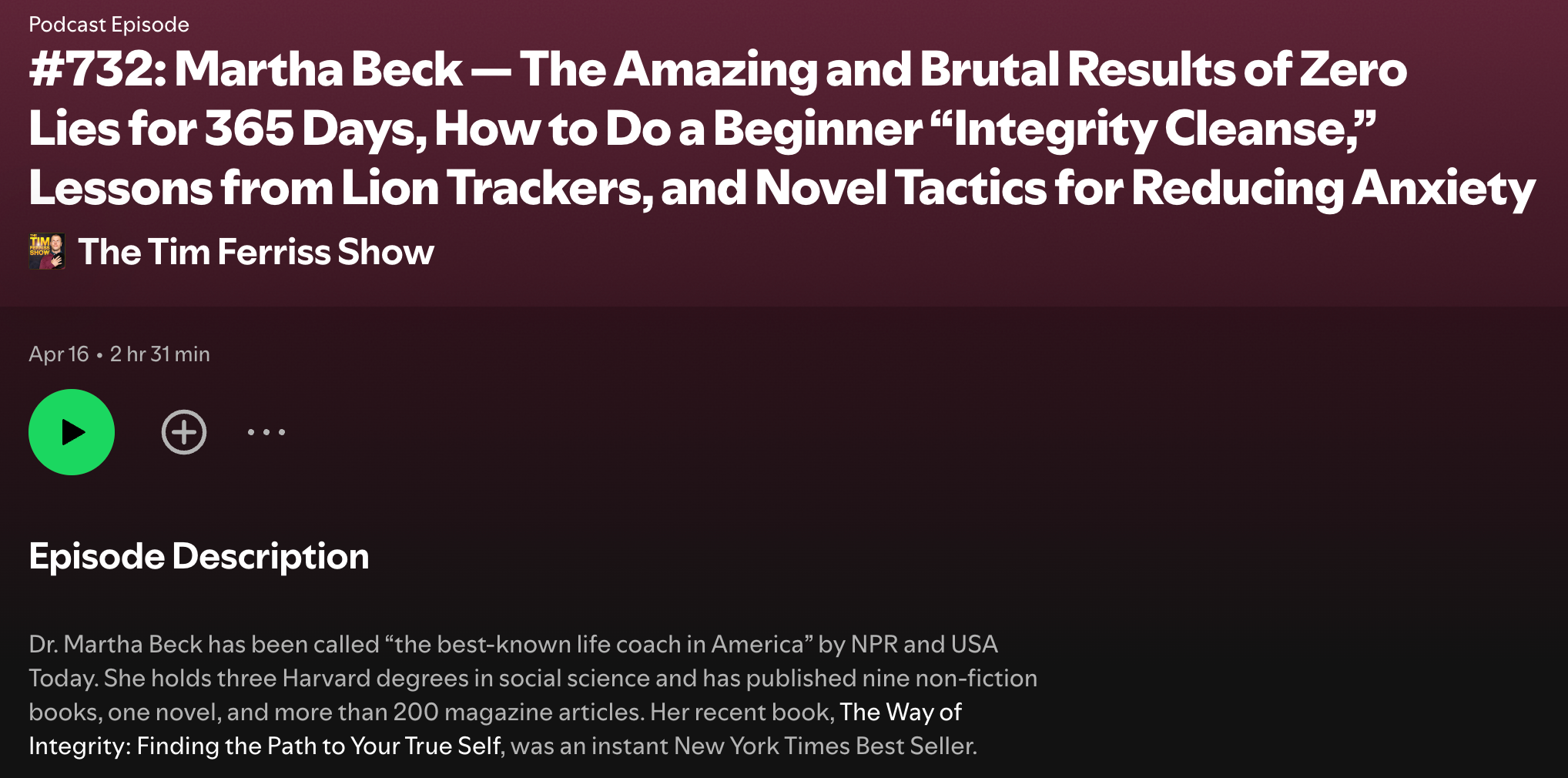
An episode description is pretty self-explanatory. It’s a short paragraph that describes what a specific episode is about and who listeners will be hearing from. You’ll want to make sure these are informative but also catchy and skimmable.
Here’s an example of an episode description from episode #732 of The Tim Ferriss Show:
Optimizing podcast descriptions for SEO
SEO efforts for podcast descriptions all come down to those podcast keywords we mentioned earlier.
For the series description, identify a couple of keywords that relate to the overall topic of the podcast. For episode descriptions, do the same thing but for the specific topics of the episode.
We recommend only using a few keywords in your descriptions since you don’t want to “keyword stuff”, which is when you stuff your copy with a massive amount of keywords to try to boost your SEO. Search engines and listening apps alike don’t like keyword stuffing, so it can actually end up having the opposite effect on searchability.
3. Podcast show notes
Show notes are where you add the depth a description doesn't have room for: Guest bios, timestamps, links to resources mentioned, and a clear call to action.
SEO for show notes comes down to two things: Keywords and formatting.
Fold in the same episode keywords you identified earlier, then structure the notes so they're genuinely easy to read. Use headers, short paragraphs, bullet points, and a bit of bolding to break things up. Formatting isn't just decoration here. It helps both readers skim and search engines understand what the page is about.
To learn more about podcast show notes, here are some resources we suggest checking out:
- Buzzsprout has created this free podcast show notes template
- Podcast Fast Track has a specialized service for creating podcast show notes
- If you want some inspiration, check out The Tim Ferriss Show.
4. Podcast transcriptions
Podcast transcriptions are the full written version of your episode, broken up by speaker and section. It boosts accessibility, serves people who'd rather read than listen, and, because it's a complete text version of your episode, it's naturally packed with your episode keywords. You’ll want to add these to your website, link them in your show notes, and even repurpose them into complementary blog posts or downloadables.
Now, I know what you’re probably thinking: “I already have a transcript that’s auto-generated in Spotify and Apple Podcasts. I’m all set.”
But here’s the thing: The transcript living inside Spotify or Apple doesn't help your website rank, and platform-generated versions are typically inconsistent and filled with errors you cannot correct. Instead, you’ll want to own an accurate, editable transcript and publish it on a page you control. That way, you’ll be reaping all the SEO and discoverability benefits.
Do that, and one transcript does a lot of work:
- Publish it on your episode page so search engines can crawl the full text.
- Link to it from your show notes.
- Repurpose it into companion blog posts, quote graphics, and downloadables.
If you’re looking for a reliable transcription tool, here are some we suggest:
5. Blog posts
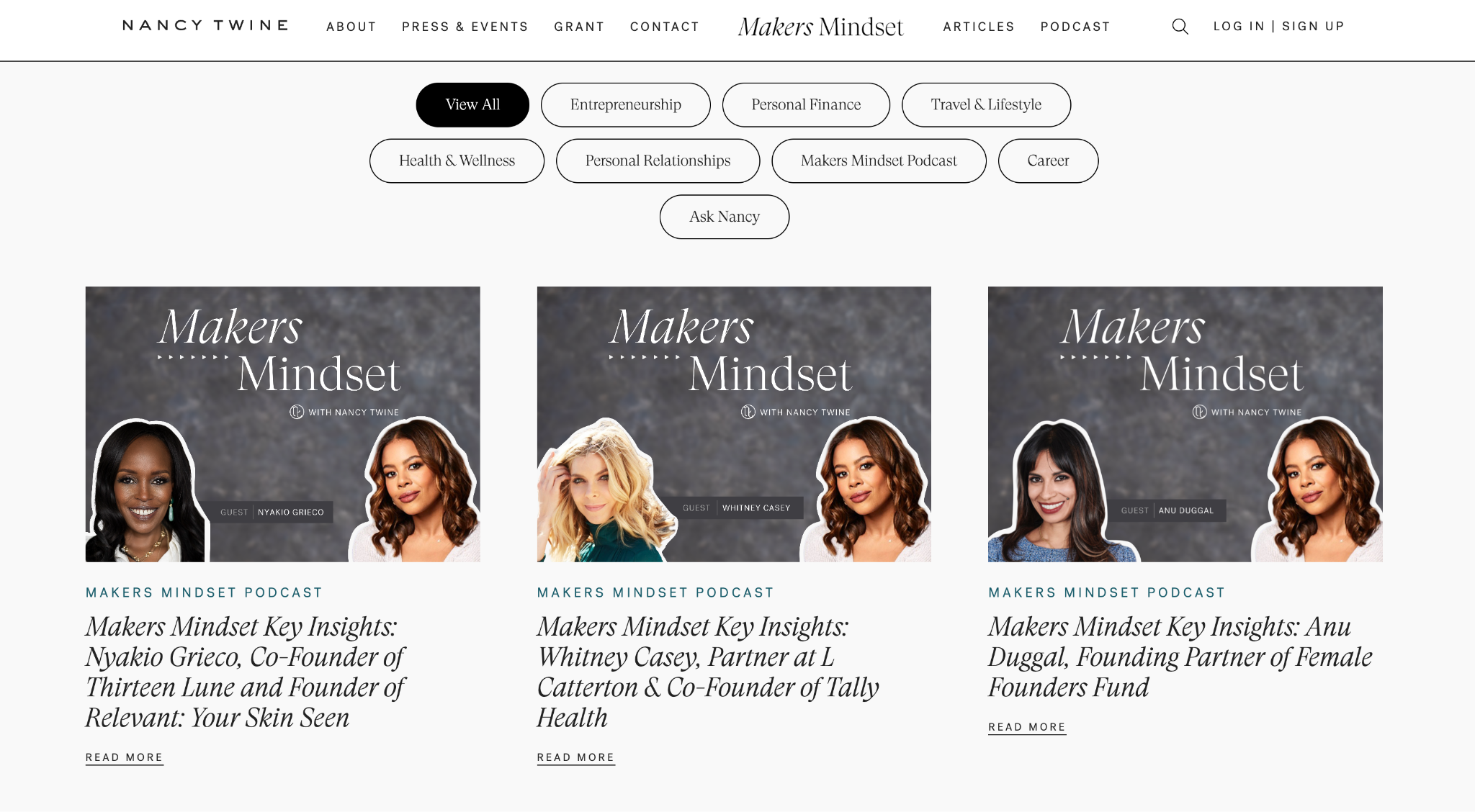
For a branded podcast, your blog posts should extend the conversations you're already having on the mic. Pull the best takeaways from an episode, go deeper on a point worth expanding, and embed the episode itself so readers can listen without leaving the page.
We recommend one companion blog per episode. That gives you three connected assets every time you publish: the episode, the transcript, and the blog. Three chances to get found instead of one, all pointing back to the same show.
This is also the cheapest content you'll ever make, because you're not starting from scratch. The interview already happened. You're just giving it a second life in a format Google can read.
For example, Nancy Twine of Makers Mindset does a wonderful job of complementing each podcast episode with a blog post. Within each article, she highlights the top takeaways from each episode, expands on points of interest, and even embeds the episode for a seamless consumption experience.
6. Podcast websites
Let’s take a look at podcast websites. Beyond SEO, having a website for your series is super valuable for a number of reasons. Here are just a few:
- Centralize all your podcast-related content: A website serves as a hub for all your podcast episodes, show notes, transcripts, and related content. This makes it easier for your audience to access and explore all your podcast offerings in one convenient place.
- Increased visibility: Having a website boosts your podcast's online presence and visibility. It allows you to leverage web traffic and capture new listeners who might not find your show on traditional podcast directories.
- Audience engagement: Your website enables better engagement with your audience through comments, newsletter sign-ups, and social media CTAs. It helps build a community around your podcast, fostering loyalty and repeat listenership.
When it comes to podcast websites, you can create a new site from scratch that’s entirely dedicated to your show, or you can add a dedicated podcast landing page to your brand’s existing site. This is a great option if you’re looking to leverage your existing audience and web traffic.
Some podcast hosting platforms can create a custom podcast website for you, like CoHost. However, you can also look into creating your own website on the Wordpresses and Squarespaces of the world for greater flexibility.
Here are a few stand-out examples of podcast websites and landing pages:
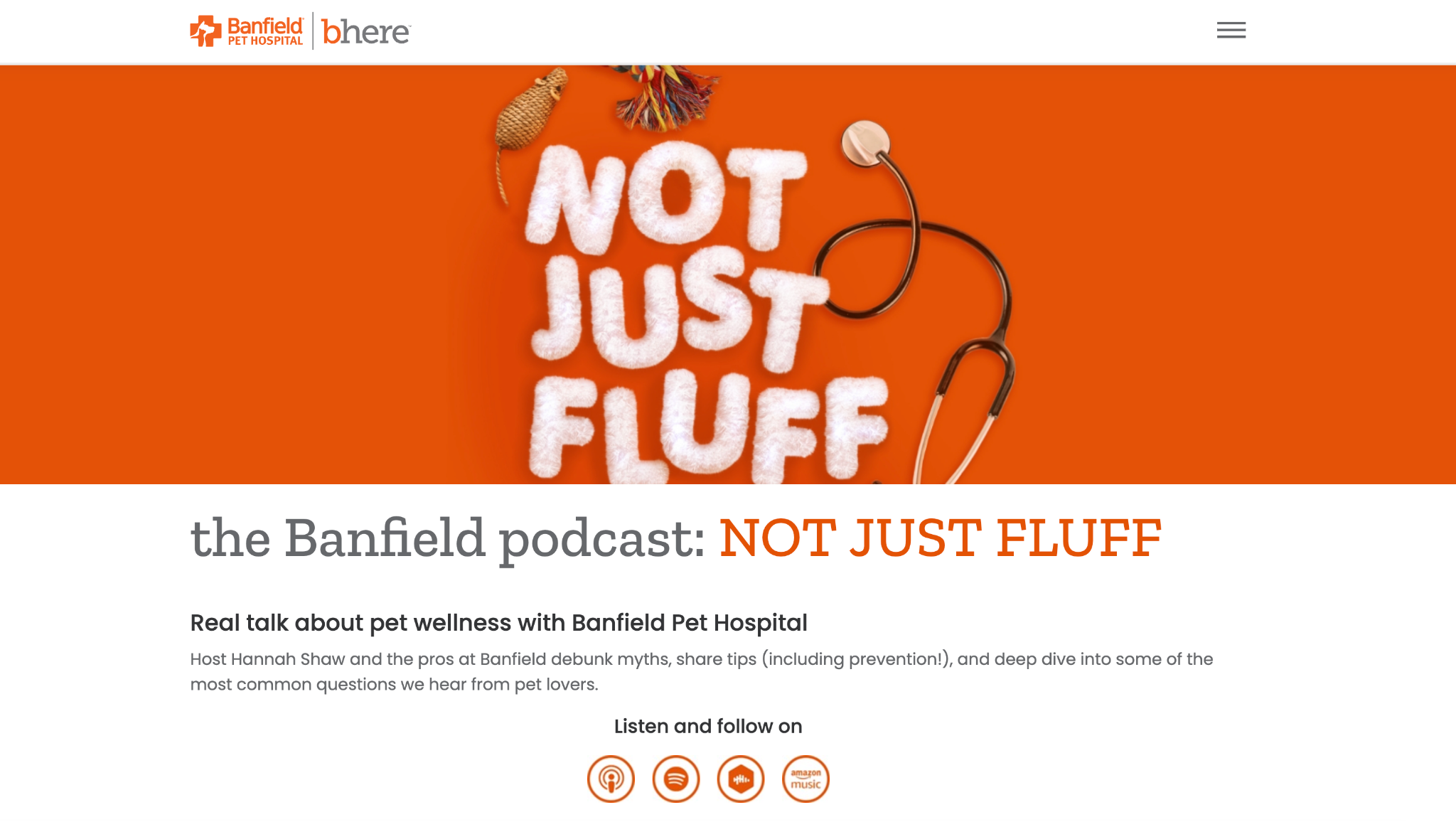
Not Just Fluff by Banfield Pet Hospital
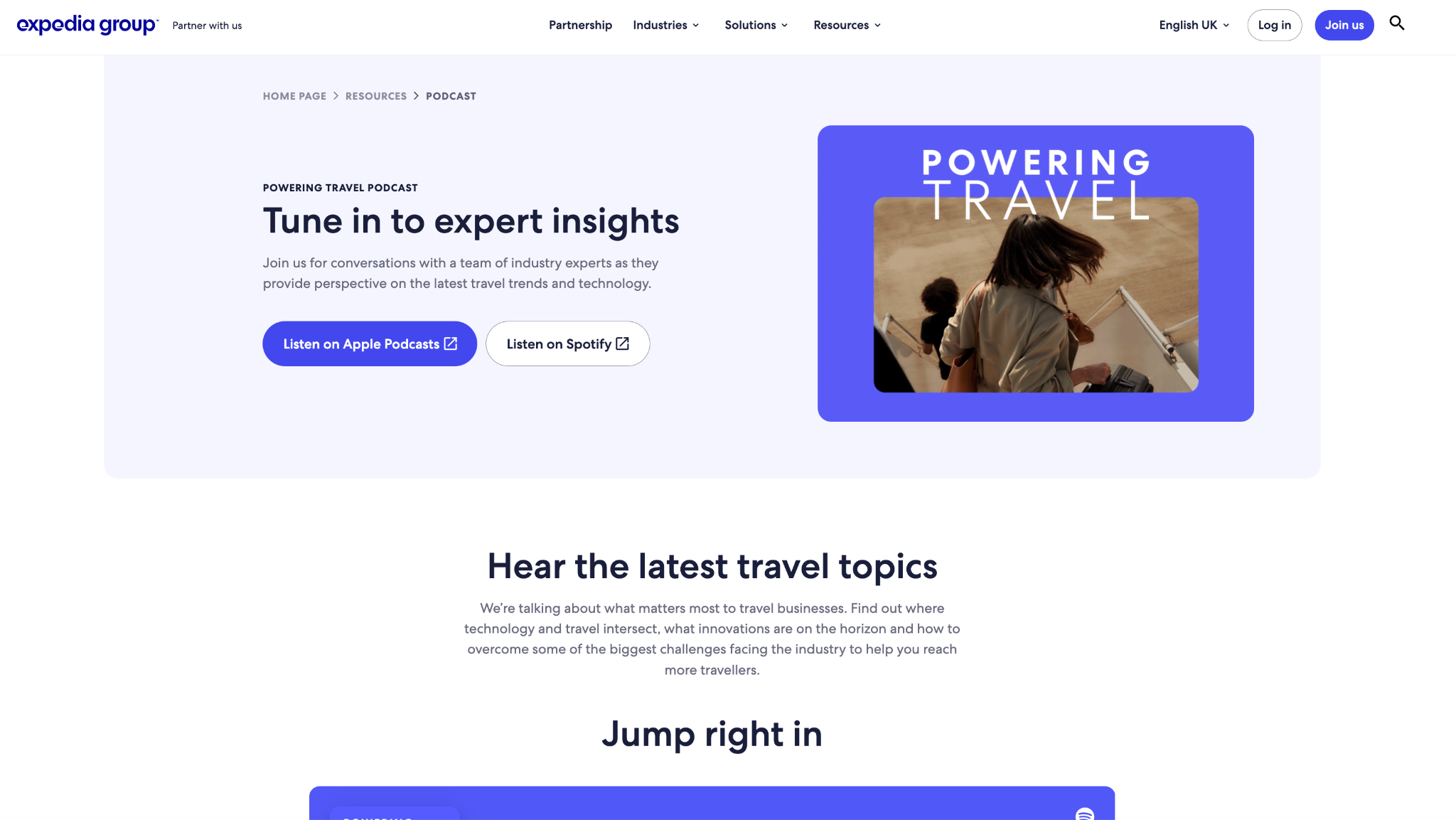
Powering Travel by Expedia Group
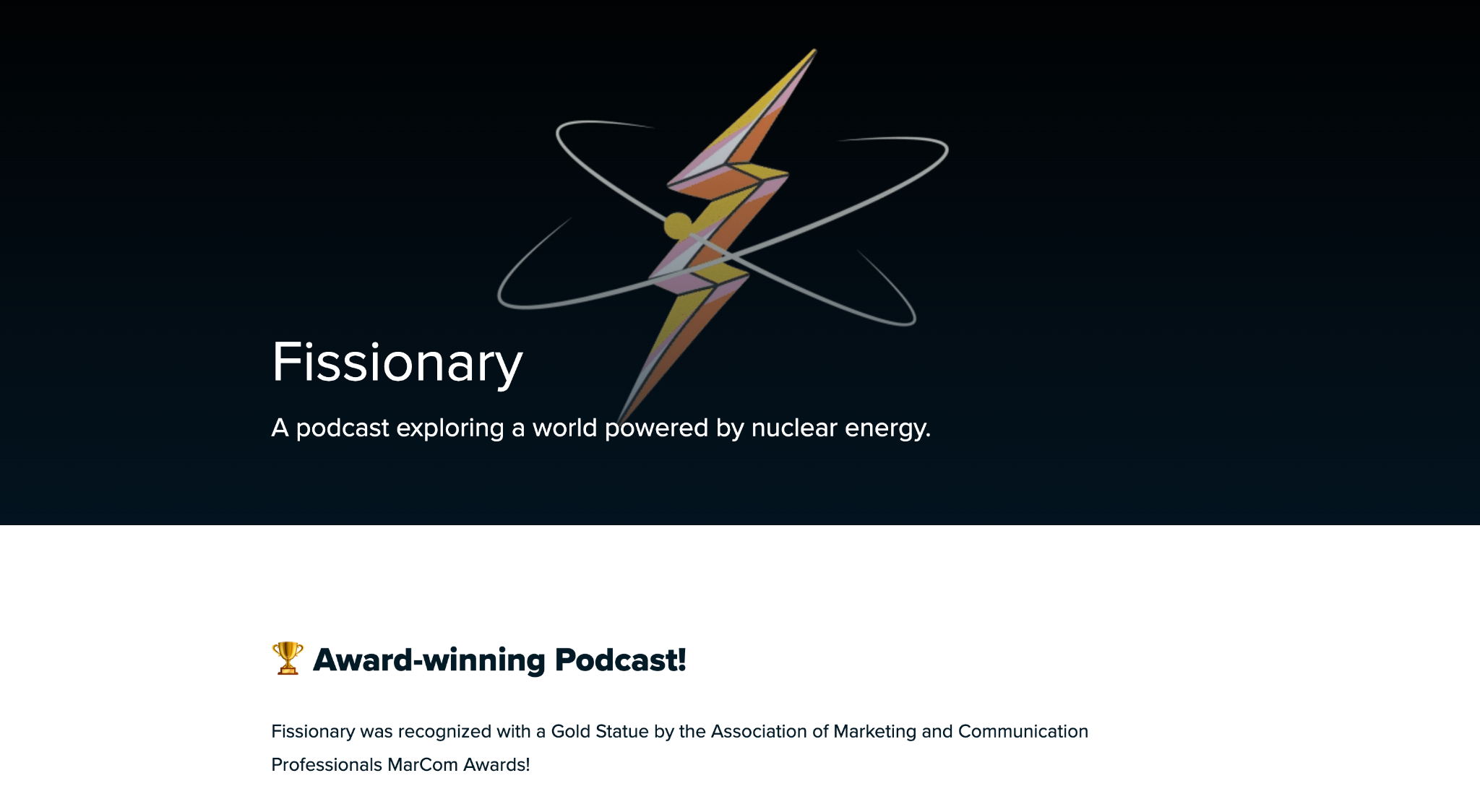
Fissionary by Nuclear Energy Institute
FAQ: branded podcast SEO
What is podcast SEO?
Podcast SEO is the practice of optimizing your podcast's titles, descriptions, show notes, transcripts, and web pages around the keywords your audience searches for. Because search engines and listening apps can't hear your audio, they rely on that surrounding text to categorize your show and recommend it, so optimizing the text is a large part of what makes your podcast discoverable.
How long does podcast SEO take to work?
Plan on months, not days. Search engines and listening apps need time to index new content, and podcast SEO compounds slowly. Publishing consistently, tracking your target keywords, and reviewing performance every month or two is what produces measurable results over time.
How do I rank my podcast higher on Spotify and Apple Podcasts?
Optimize the text that those apps can read. Use clear, keyword-informed series and episode titles and descriptions, keep your metadata consistent, publish detailed show notes, and provide accurate transcripts. Consistency and listener engagement (completion, follows, ratings) also influence how these apps recommend your show. For a complete deep dive, check out CoHost’s complete guide.
Do I need to optimize my podcast for AI tools like ChatGPT?
Yes, and it's less work than it sounds, because it's a relatively similar process to your other SEO optimization efforts. Tools like ChatGPT and Google's AI Overviews can't listen to your episodes; they read. They pull from clean, well-structured text and cite the sources that answer a question clearly, which is exactly what your transcripts, show notes, and companion blogs already provide. To learn more about optimizing for LLMs specifically, check out this article on CoHost.
Will AI Overviews and ChatGPT kill my podcast's search traffic?
Not if you've done the groundwork. These tools change how answers get delivered, not what they're built from, and they're still built from written, structured text. The real risk isn't AI, it's being audio-only in a text-first index. Shows that publish transcripts, show notes, and companion blogs get pulled into AI answers. Shows that don't, don't get mentioned.
Are you ready to optimize your podcast’s SEO?
If there's one idea to carry out of this, it's this: everything that decides whether your show gets found, Google, Spotify, Apple, YouTube, and now AI tools like ChatGPT, shares the same blind spot. None of them can actually hear your episode. They read the text around it.
That includes (but is not limited to) an accurate transcript, real show notes, a companion blog, and a home page you own. Optimize, track, and update these moving parts consistently, and every episode will keep working for you long after it publishes, quietly bringing in the right listeners.
But I will note (again) that none of this is instant. Podcast SEO is a long game, the same way podcasting itself is. Search engines and apps need time to index your content, and need to see clean, consistent material before they'll trust you as a source. Give it a few months, keep your target keywords in view, and check your performance every month or two.
And it's worth the wait. A brilliant branded podcast that no one can find does nothing for your business. One that shows up in search, on YouTube, and in an AI answer right when your buyer is looking is one of the most durable marketing assets you can build.
Want to keep up to date with all things branded podcasts, including the latest tips, strategies, and stats? Join the community of marketers who subscribe to our bi-weekly newsletter, The Branded Podcaster.
Share
About the author

Tianna Marinucci is a content creation and digital marketing specialist. She graduated from McGill University in 2021 and has since worked in a variety of industries from interior design to technology.
After traveling to more than 60 countries and working in three, she is inspired by diverse cultures and motivated by unique experiences.
In her spare time, Tianna loves trying new foods, going to concerts, and learning more about history and socio-economics through books and podcasts.



.png)


.png)
.png)
.png)
.png)